At sea level
Staying in Lynmouth: the harbour village
Waking up at the harbour puts the rivers, the coast path and the East Lyn gorge within a few hundred yards, and puts the shops five hundred feet above you.
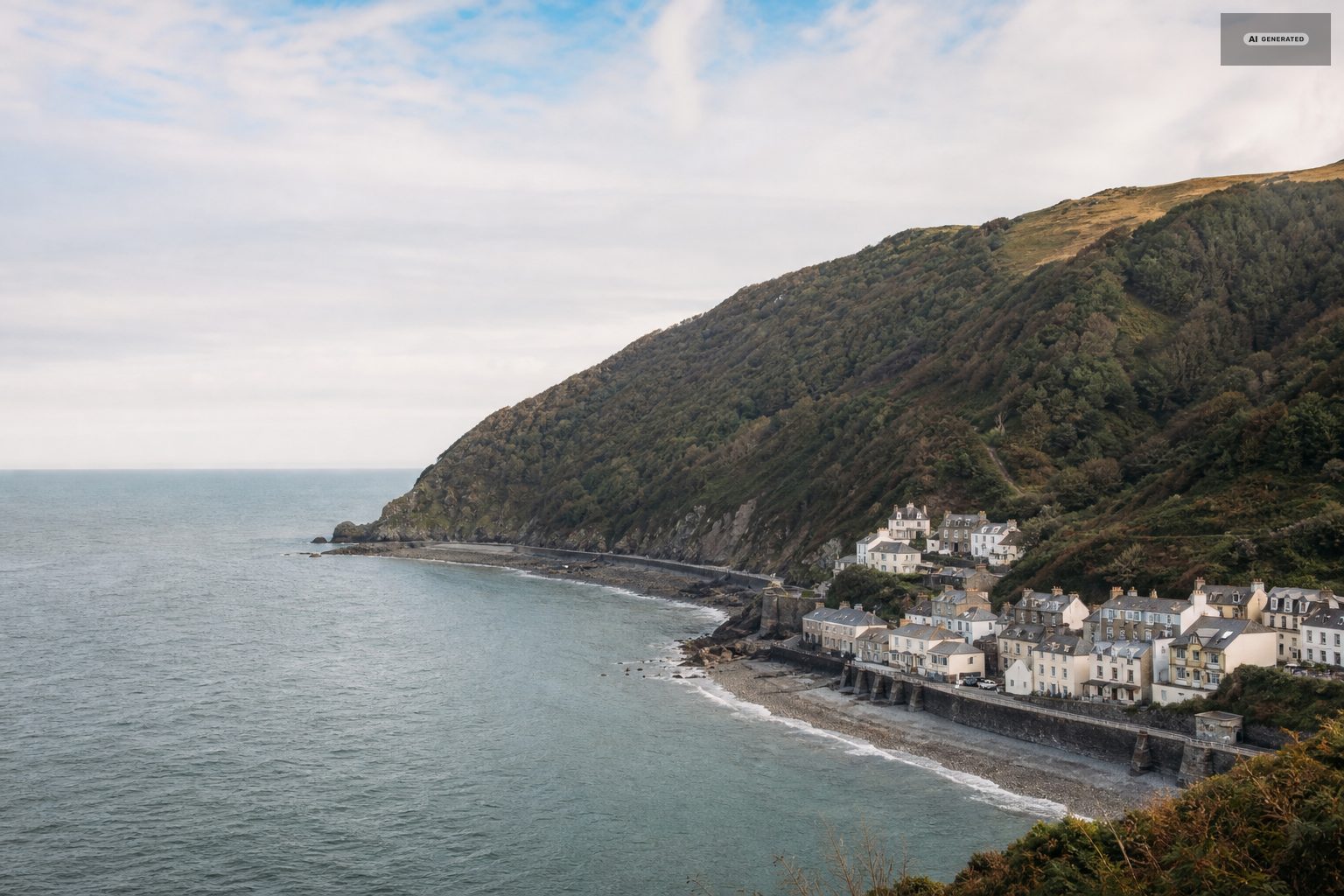
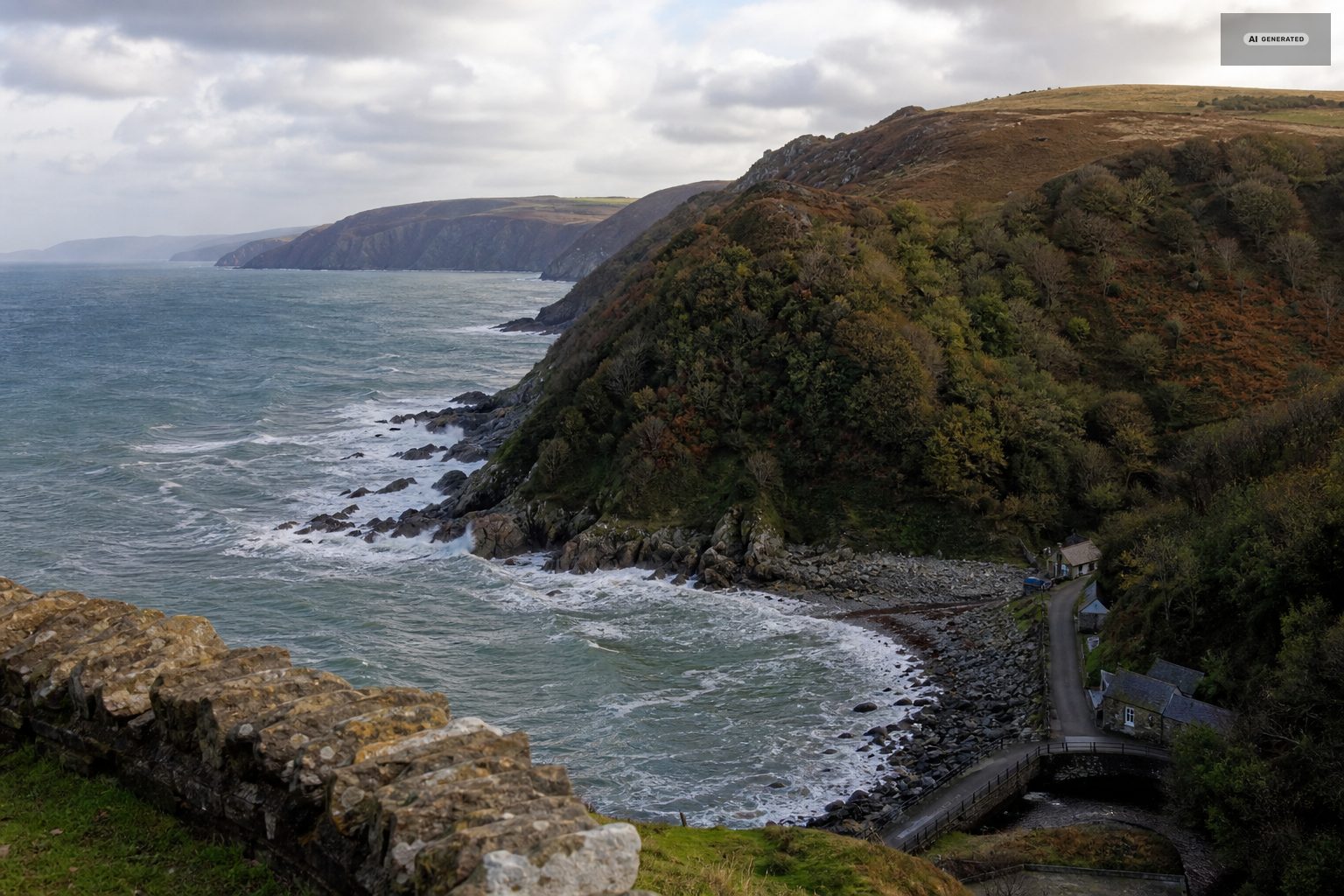
Lynmouth is a small village wedged into the bottom of a gorge where the East and West Lyn arrive together and go into the sea. Staying here means the water is the first thing you hear and the last, and it means everything else in the area is either along the coast or up.
-
AI-generated image 01
What is on the doorstep
The harbour and the Rhenish Tower are a two-minute walk from anywhere in the village. The Flood Memorial Hall sits opposite the harbour and explains the shape of everything around it - see the 1952 flood. The Esplanade carries the tea rooms and the inns, and Lynmouth Street runs back from it with the shops.
The lower station of the cliff railway is on the Esplanade, which is the practical answer to the five hundred feet between you and Lynton.
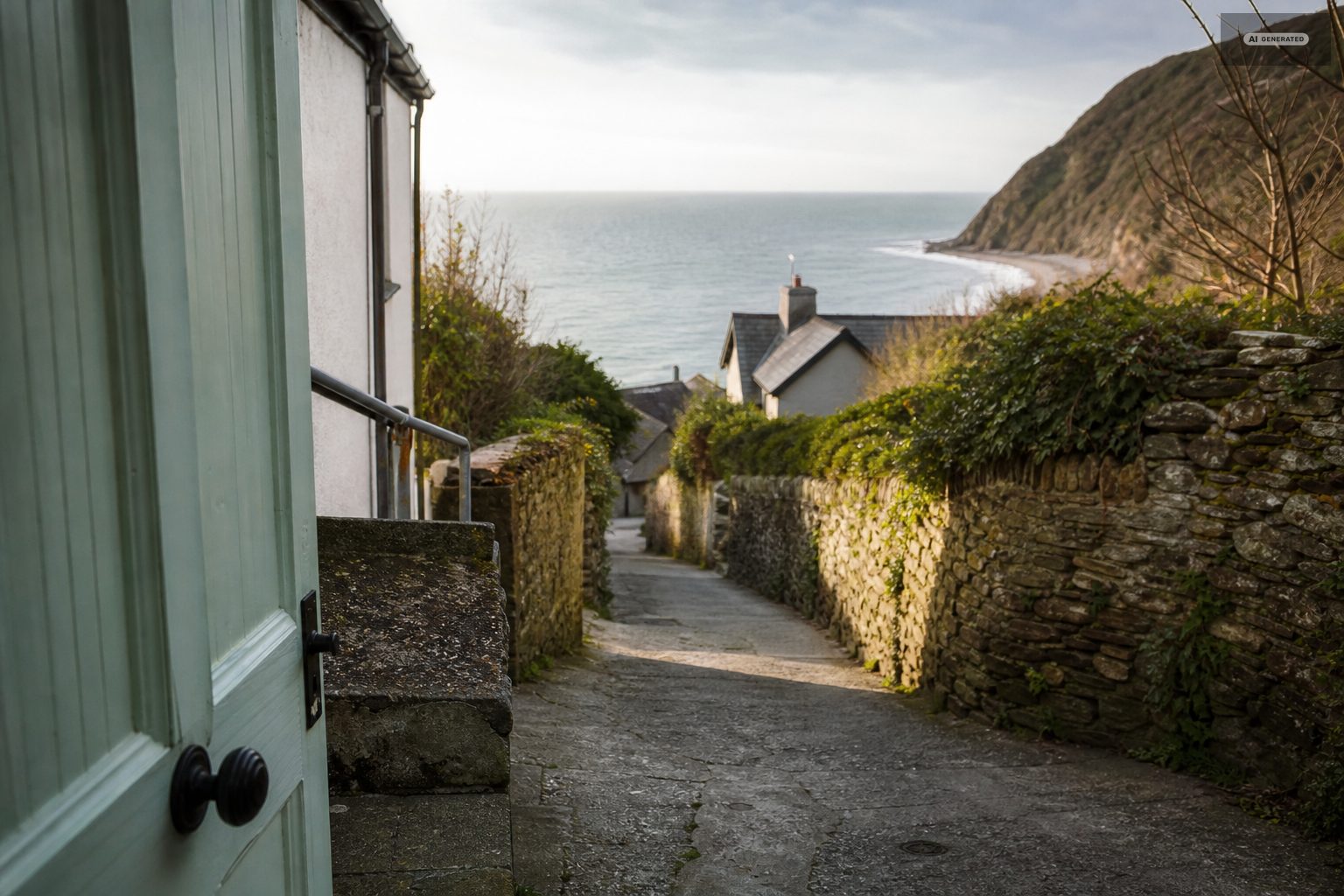
Staying at the bottom means the harbour, the two rivers, the Rhenish Tower, the Flood Memorial Hall and the lower cliff railway station are all within a few hundred metres of the door. It also means the sound of water, which is constant here and which most people stop noticing by the second night.
-
AI-generated image 02
Walking from the door
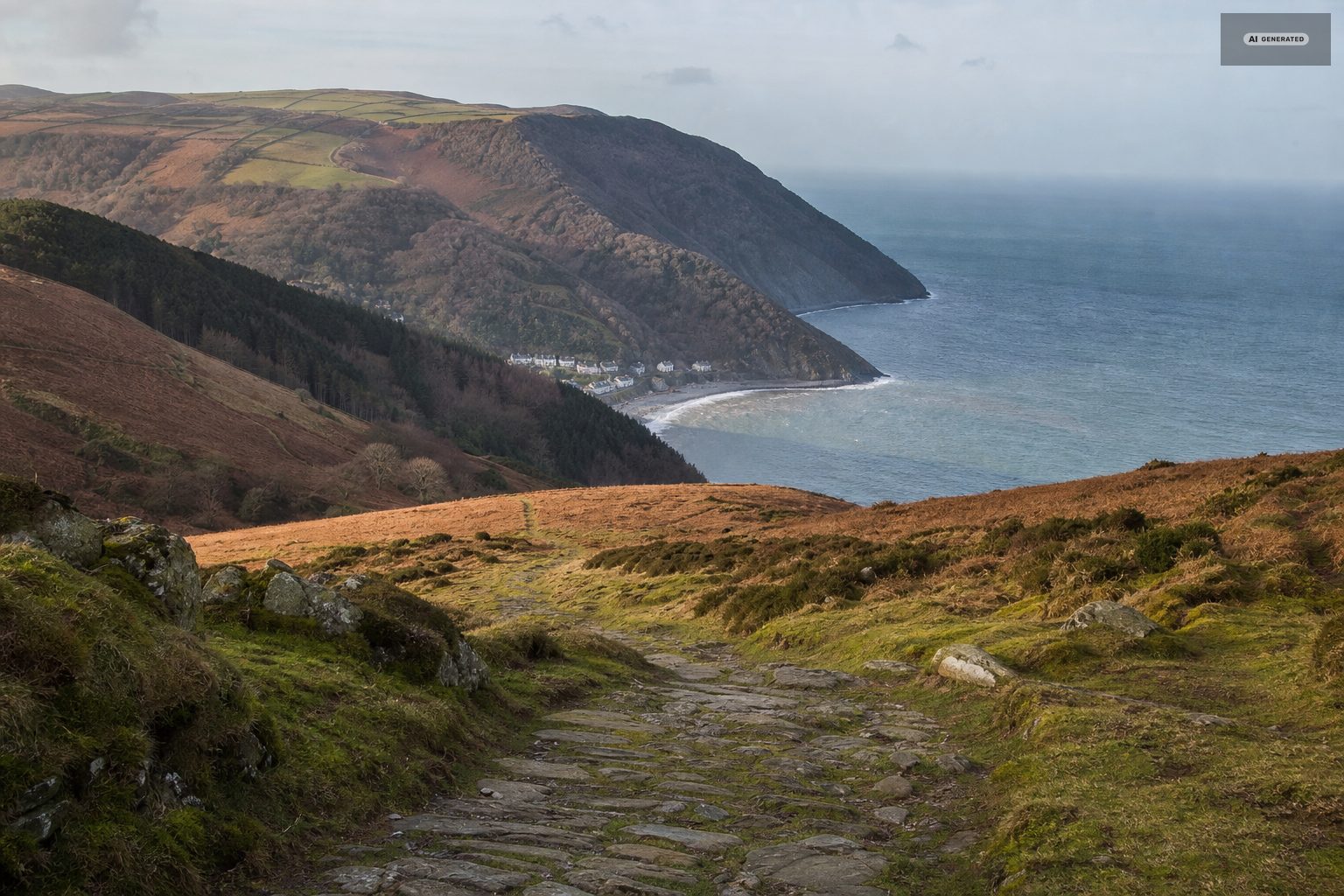
This is the real argument for staying down here. The path to Watersmeet leaves from beside the harbour and is a mile and a half of wooded riverside. The coast path east climbs Countisbury Hill towards Foreland Point. The Two Moors Way starts here and goes straight up onto the moor. None of it needs a car or a bus.
Three walks start without a car: up the East Lyn to Watersmeet and back, out east over Countisbury on the coast path, and up the cliff - on foot or by railway - to join the North Walk towards the Valley of the Rocks. That is most of a week's walking with no driving at all, which is the practical argument for staying down here rather than up.
-
AI-generated image 03
What to know before booking
The light
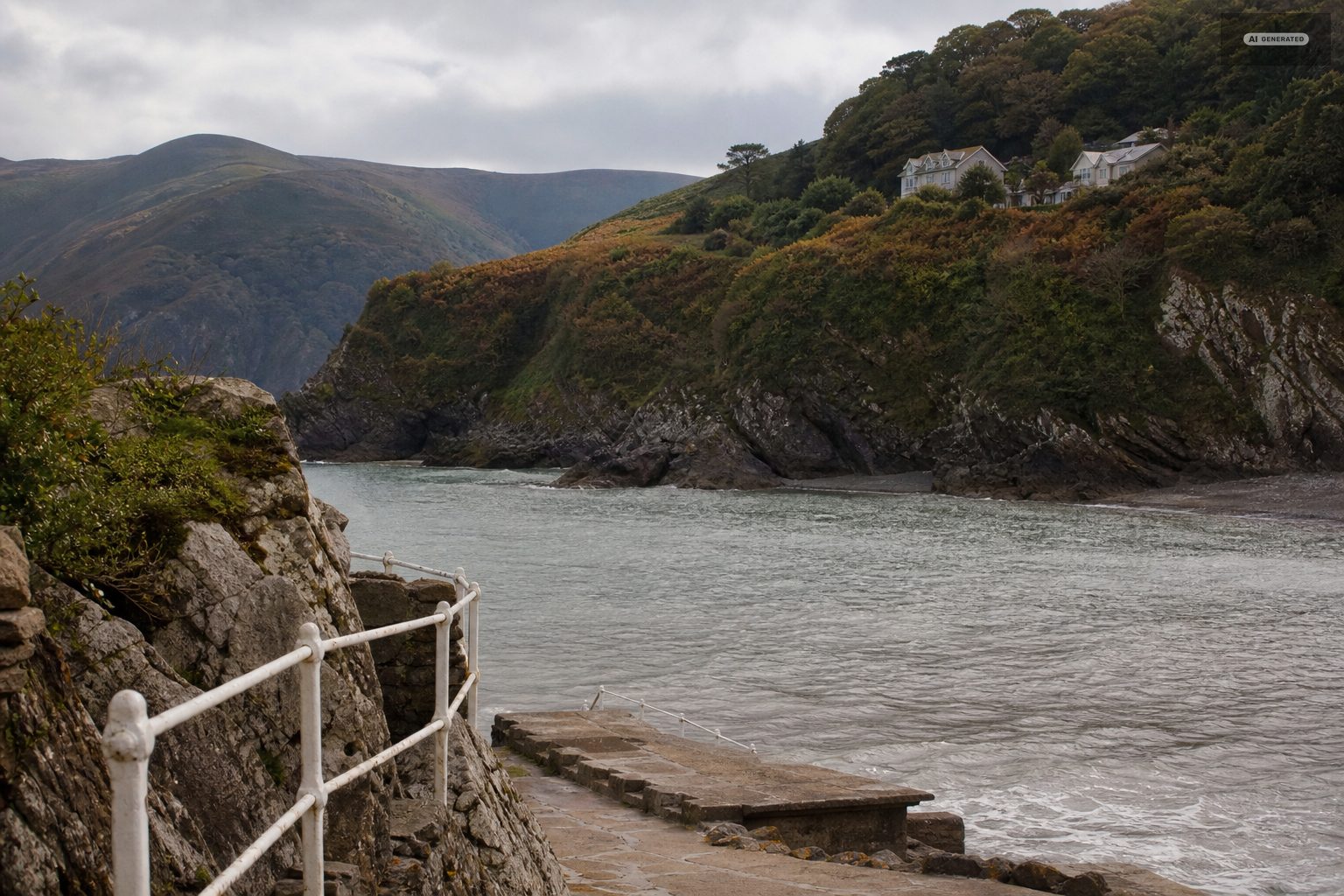
A gorge with six-hundred-foot sides behind it loses the sun earlier in the afternoon than the clifftop does, particularly in spring and autumn. In midsummer it hardly matters; in October it does. If long evening light on a terrace is part of the plan, Lynton has more of it.
Day visitors
Lynmouth is where the coaches and the car parks are, so the harbour front is busy through the middle of the day in season and then empties. Staying here means you get the early morning and the evening to yourself, which is the better half of the bargain.
Parking
There is not much of it and it goes early. If your accommodation offers a space, take it. If it does not, plan to park once on arrival and leave the car where it is - almost nothing worth doing here needs it.
The river
Rooms overlooking the water are the ones people want, and the sound is constant. After heavy rain on the moor it stops being a murmur, which some people find wonderful and some do not.
-
AI-generated image 04
What kind of accommodation there is
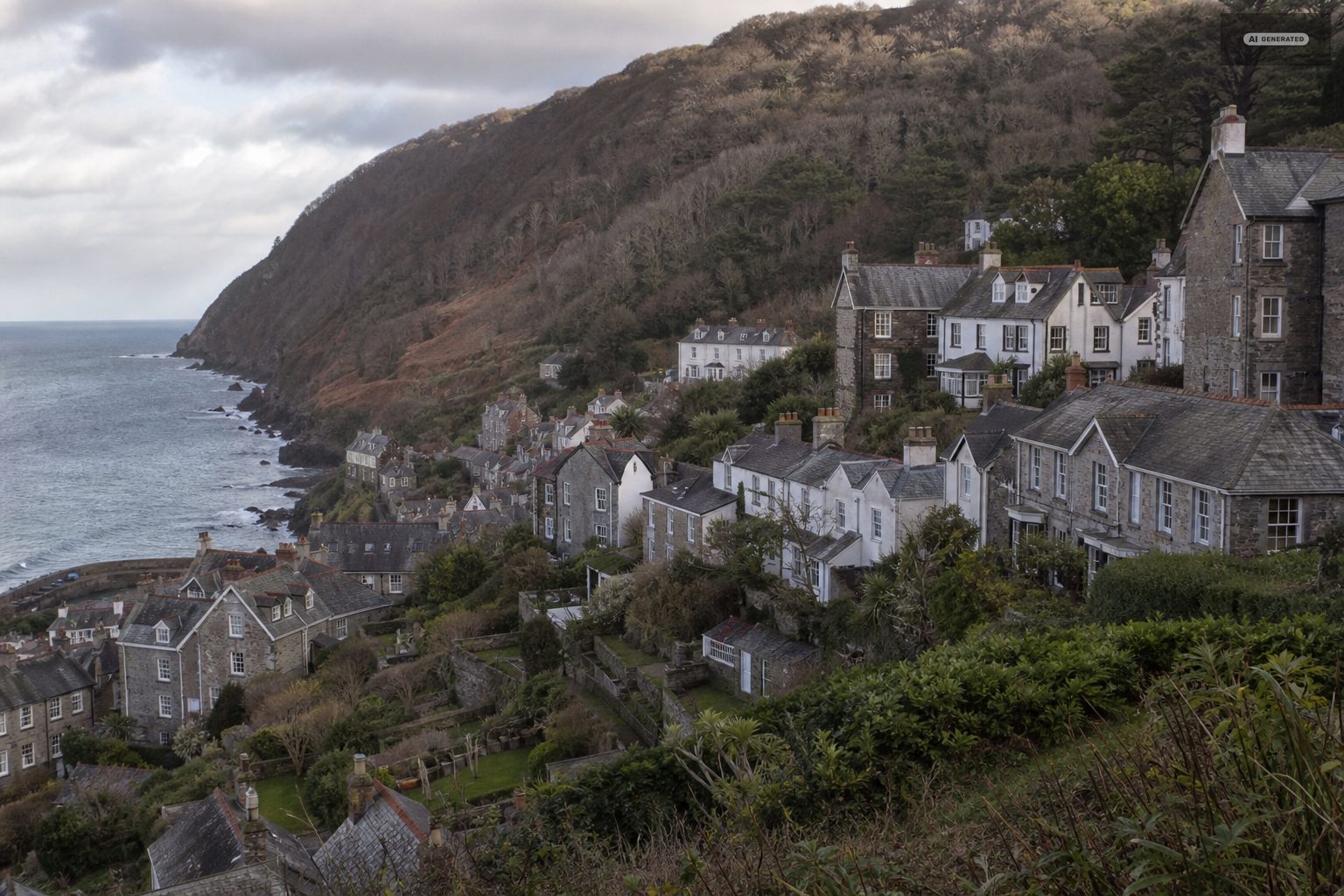
Hotels along the harbour and the river, inns with rooms above them, and a good number of family-run guest houses in the streets behind - see hotels, inns and guest houses. Self-catering cottages and apartments are dotted through the village, several of them conversions of the older buildings. Because the village is small and built on a slope, ground-floor rooms and parking are the two things worth asking about first.
The stock is small and old. Harbour-side inns with rooms above, Victorian villas on the Esplanade, cottages up the side lanes and a handful of self-catering conversions. Very little of it is purpose-built, which is why room shapes vary so much within the same building and why photographs are worth looking at properly before booking.
-
AI-generated image 05
The rhythm of a day here
Lynmouth runs on the tide and on the day-visitor cycle, and staying here means you get the parts the visitors miss. Early morning at the harbour, before the car parks fill, is the quietest and best hour in either village. The middle of the day belongs to everyone else. From about six the coaches have gone, the light comes up the gorge from the west, and the place is small again.
Lynmouth empties in the evening. The day visitors leave with the light, the car parks clear, and the village goes quiet in a way that surprises people who only ever saw it at two in the afternoon. Staying overnight buys you the harbour at dusk and again at breakfast, which is when it looks like itself.
Common questions
Is Lynmouth a good place to stay?
Yes, if you want the harbour, the rivers and walks starting from the door. The trade-offs are early loss of afternoon light in the gorge, day-visitor traffic through the middle of the day, and limited parking.
How do you get from Lynmouth to Lynton?
The cliff railway from the Esplanade takes under two minutes and covers all five hundred feet. The road is walkable but steep.
Which walks start in Lynmouth?
Watersmeet along the East Lyn, the coast path east over Countisbury towards Foreland Point, and the Two Moors Way, which begins here and climbs onto the moor.
Is there parking in Lynmouth for guests?
Limited, and it fills early in summer. If your accommodation includes a space, take it - and then leave the car there, because almost nothing in the village needs it.