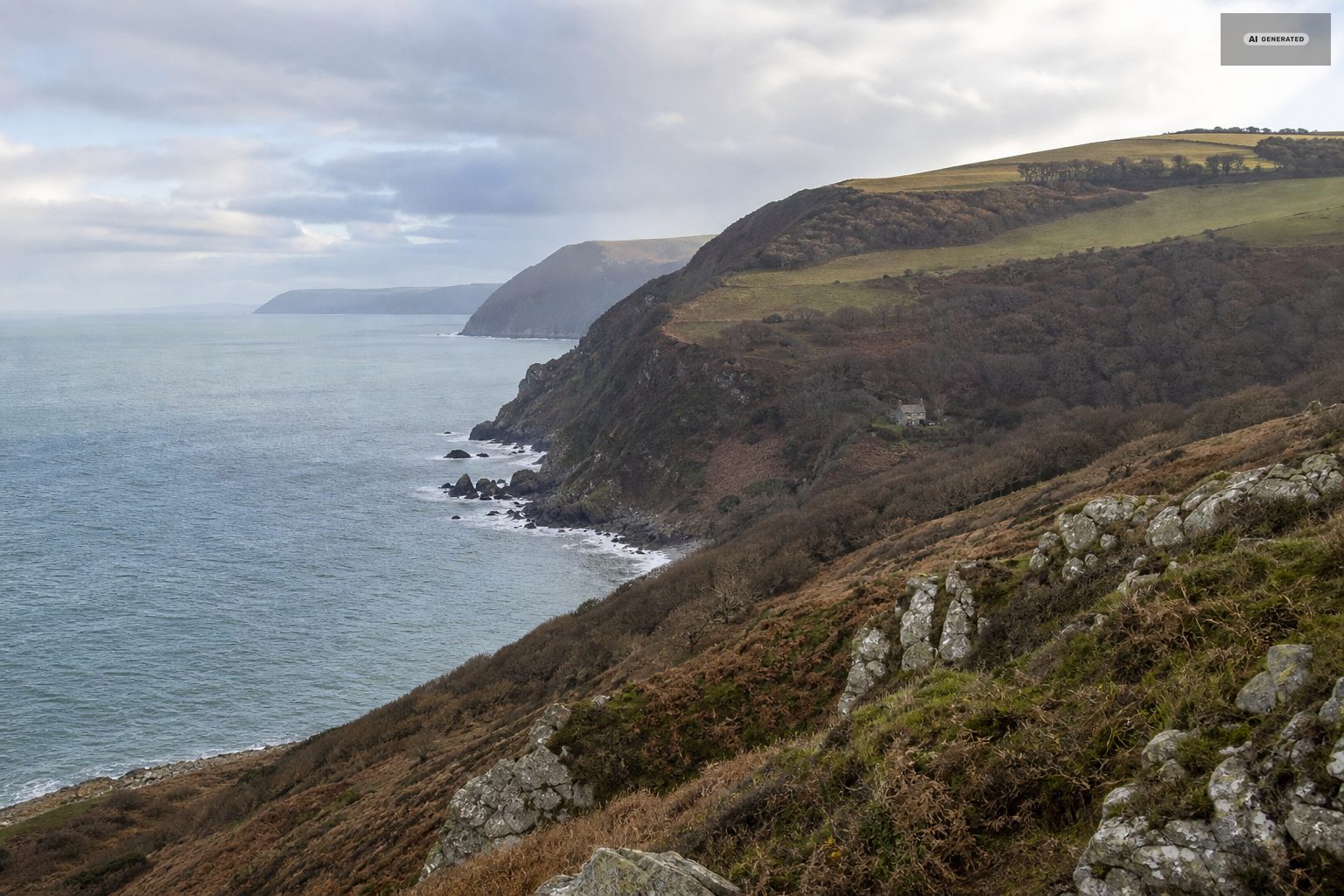
Opened Easter 1890
The Lynton and Lynmouth Cliff Railway: five hundred feet of cliff on water and gravity alone
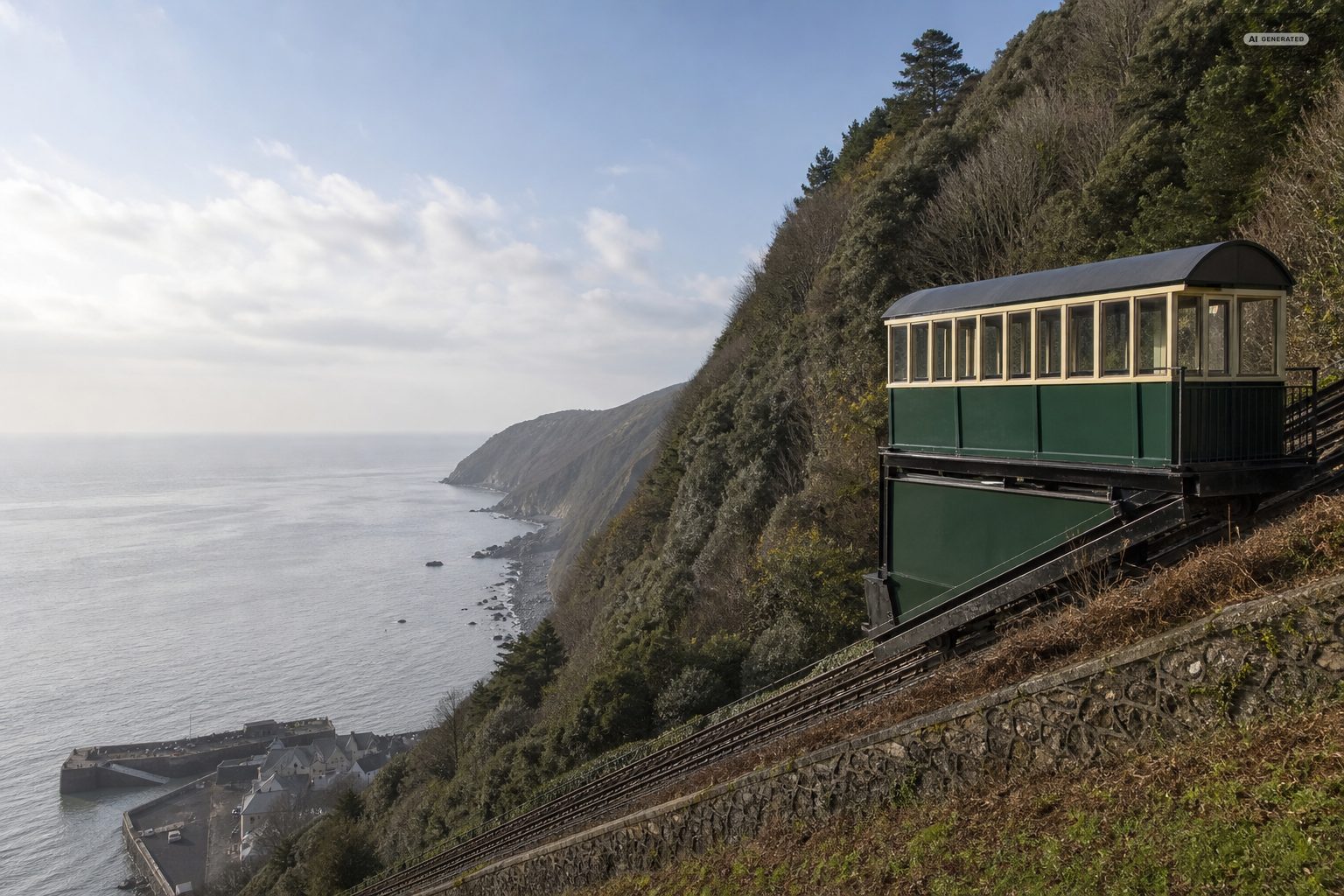
No engine has ever been fitted. The carriage at the top fills a tank until it outweighs the one at the bottom, and the cliff does the rest.
The cliff railway is the reason these two villages function as one. Lynton stands on a shelf roughly five hundred feet above Lynmouth, and for most of the nineteenth century the only way between them was a road that punished horses. In 1890 that changed. A funicular opened between the harbour and the clifftop that has never had an engine of any kind, and it is still working on the principle it was built with.
-
AI-generated image 01
How the cliff railway works
Two carriages sit on twin tracks, connected by a cable that passes round a pulley at the top. Each carriage has a water tank beneath the passenger compartment holding several hundred gallons.
- At the top station the tank is filled from a supply fed by the West Lyn.
- The upper carriage now weighs more than the lower one, and begins to descend.
- The cable transmits that weight over the pulley, hauling the lower carriage up.
- At the bottom the tank is emptied, and the carriage that has just arrived at the top becomes the next one to be filled.
The brakeman controls the descent, not the ascent. Speed is managed by braking the heavy carriage; the light one simply follows. The amount of water taken on is adjusted for the number of passengers in each car, which is why the loading sometimes pauses while the tanks are set.
The system is closed and self-correcting: the more people at the top, the more the machine has to pull, and the more water it takes to do it.
-
AI-generated image 02
What it is like to ride
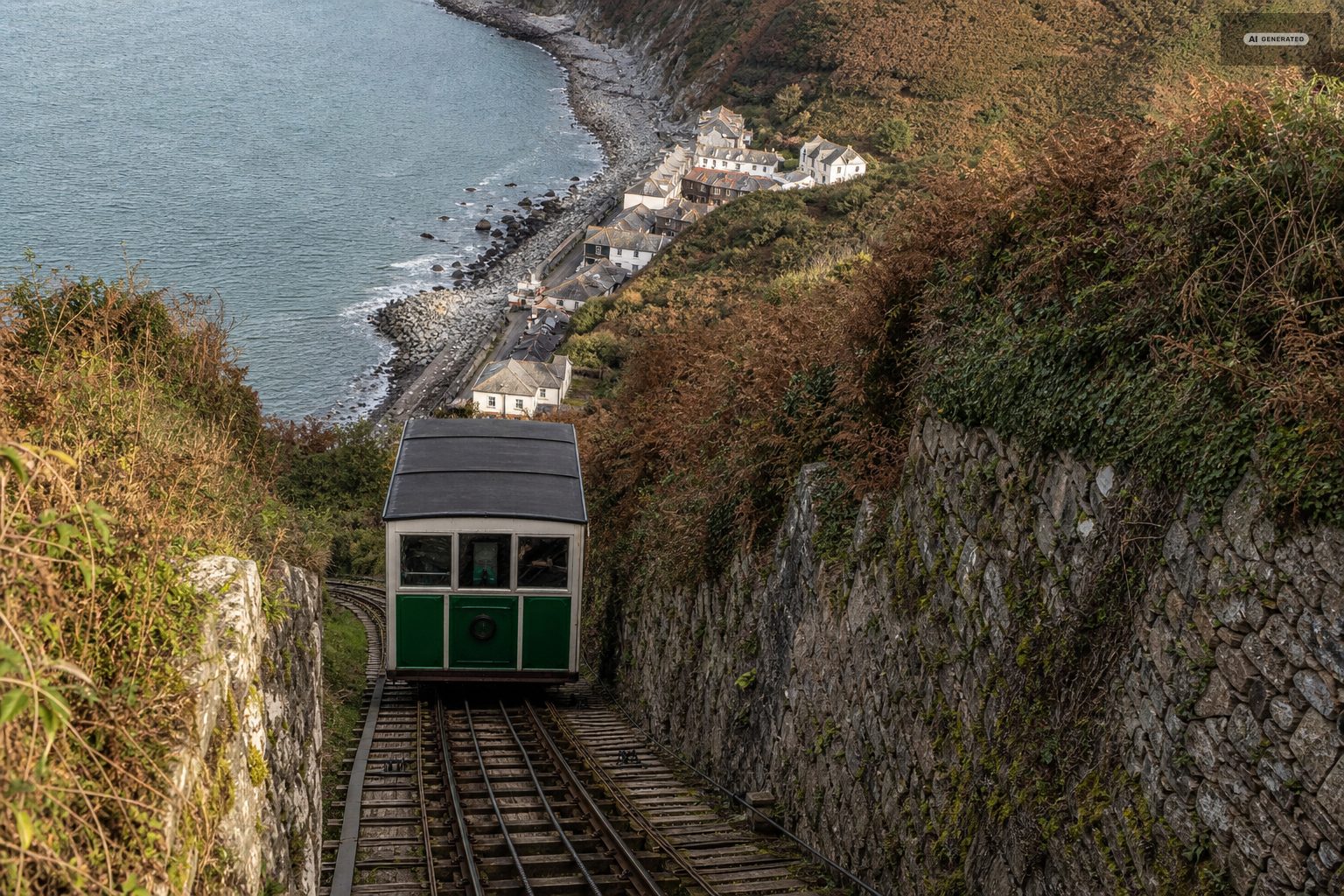
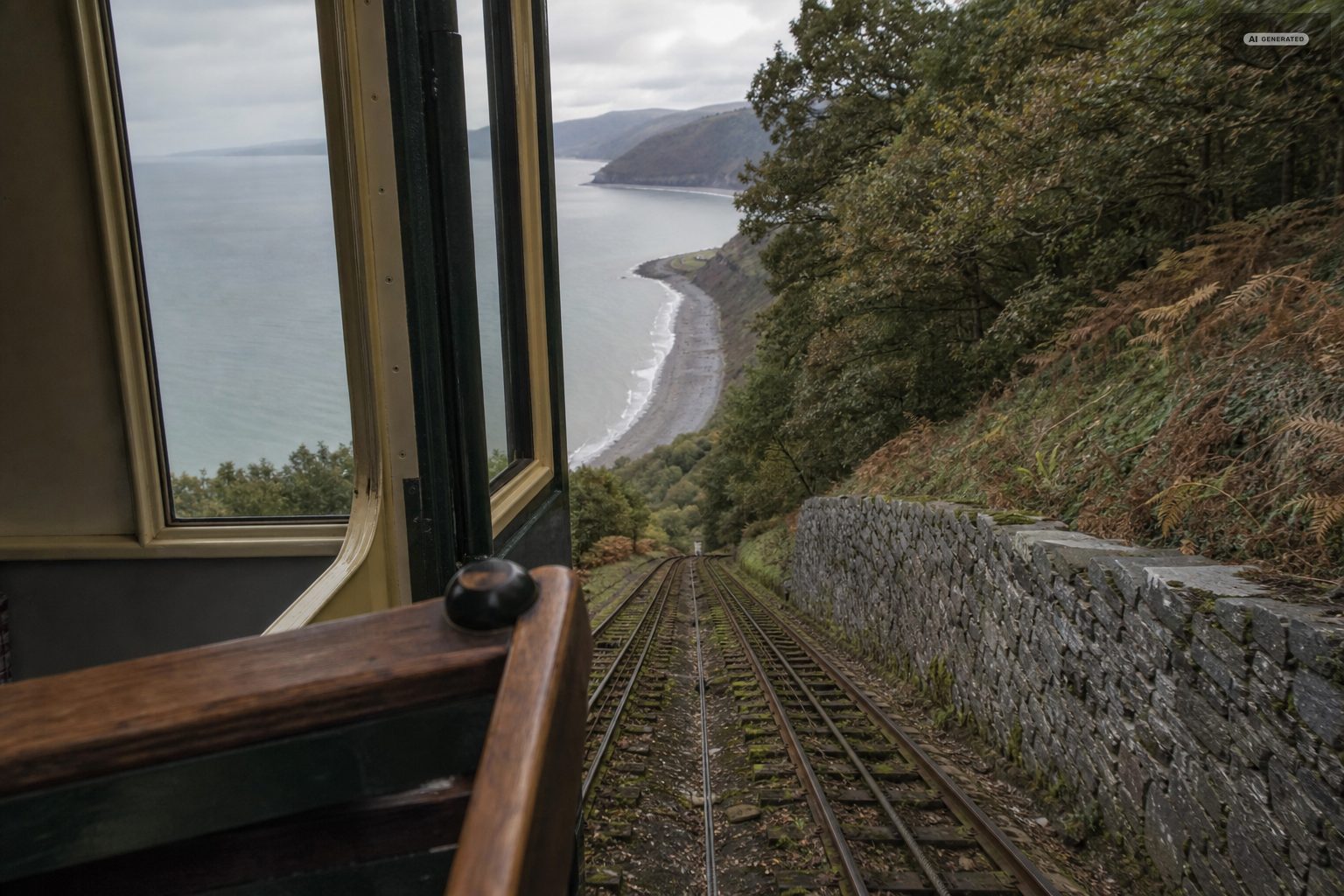
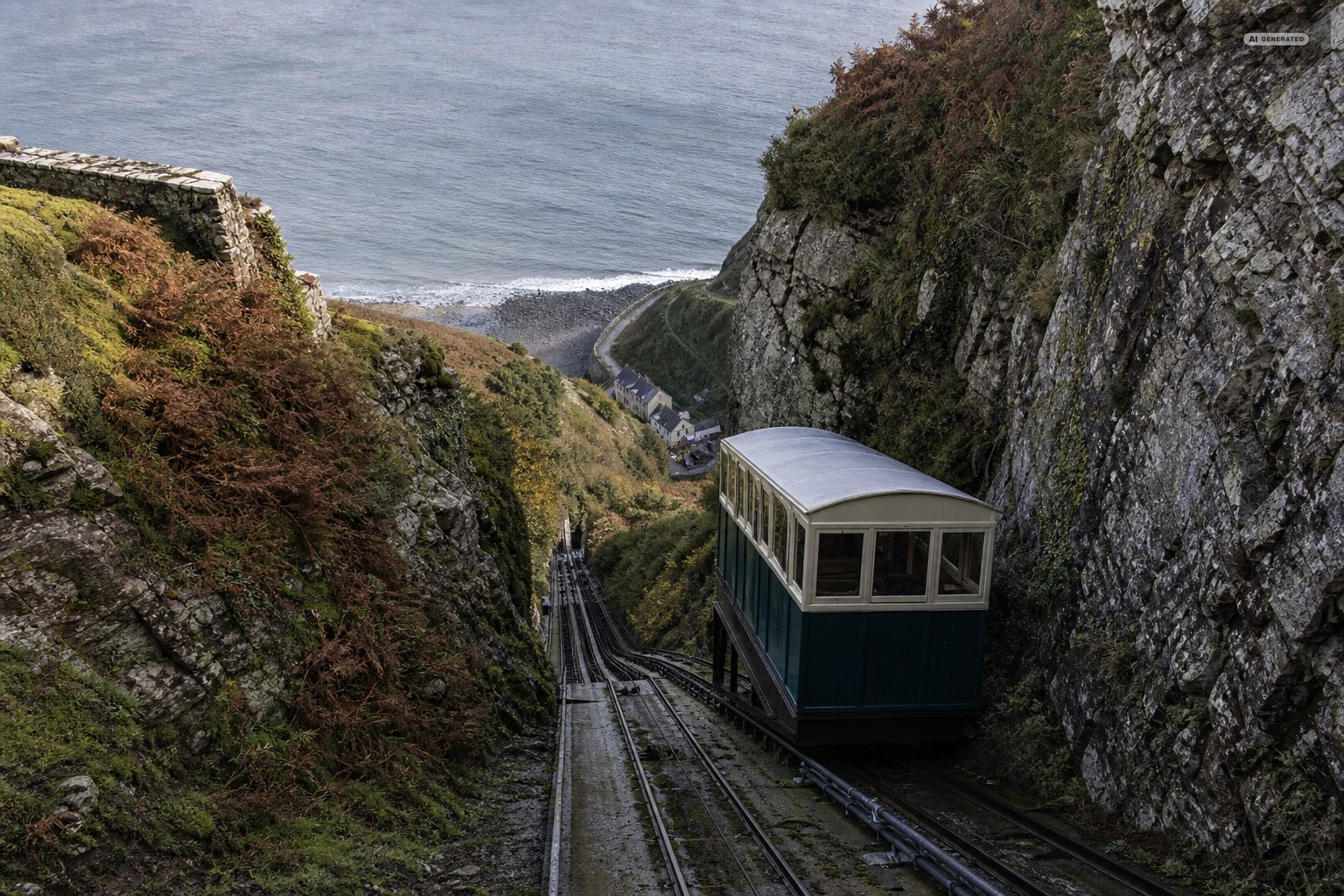
The journey takes under two minutes. Both carriages have open ends and glazed compartments, and the gradient - about one in one and three-quarters - is steep enough that the floor is stepped. Going up, the view opens over the harbour, the Rhenish Tower and the Bristol Channel; going down, you drop into the tree canopy and then into the village.
Queues form at the bottom on summer afternoons because everyone who has walked to Lynmouth wants a ride back up rather than the road. If you are choosing a direction, walking down and riding up is the easier half of that bargain.
The ride itself takes under two minutes and the two carriages pass halfway, which is the moment most people photograph. Because the track is straight and steep, the view opens the whole way up: the harbour, the pier and the Rhenish Tower fall away below, and on a clear day the Welsh coast sits across the water on the horizon.
-
AI-generated image 03
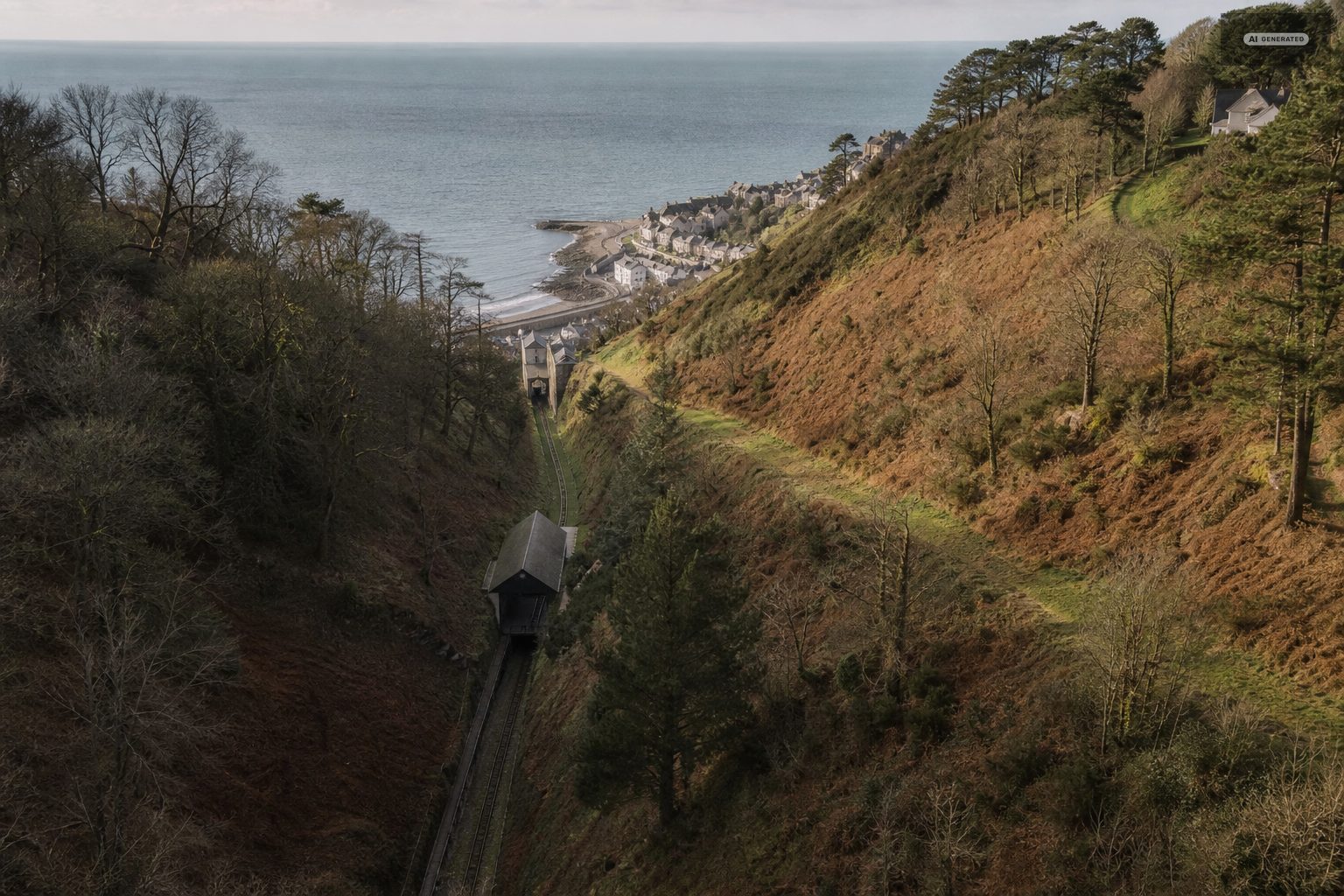
Where the Lynton and Lynmouth stations are
The lower station is on the Esplanade in Lynmouth, a minute from the harbour and the Flood Memorial Hall. The upper station is at the end of Lee Road in Lynton, beside the Town Hall - a building that was already a century old in 2000, and which for years housed the tourist information centre.
Both stations are where you would want them. The lower one opens onto the Esplanade a few steps from the harbour and the Rhenish Tower; the upper one comes out on the Lynton clifftop close to the shops and the Town Hall. Neither involves a walk to find, which is the point of the thing.
Because the two ends sit five hundred feet apart, the railway is also the simplest way to turn a linear coast walk into a circular day: walk out along the cliff and ride back up, or ride down and walk home along the river.
-
AI-generated image 04
Getting the most out of it
The railway is not a detour, it is the connection between the two halves of a day out. A reliable shape: ride down in the morning, walk the harbour and the river channel, take the East Lyn path towards Watersmeet for as long as suits you, come back for lunch in Lynmouth, then ride up and cross Lynton to the Valley of the Rocks in the afternoon. That uses the railway twice and never repeats a view.
Fares, running seasons and daily hours are set by the operating company and change from year to year, so check before you plan a tight connection - particularly outside the main season, when the service is reduced.
-
AI-generated image 05
Why a water powered railway survived here
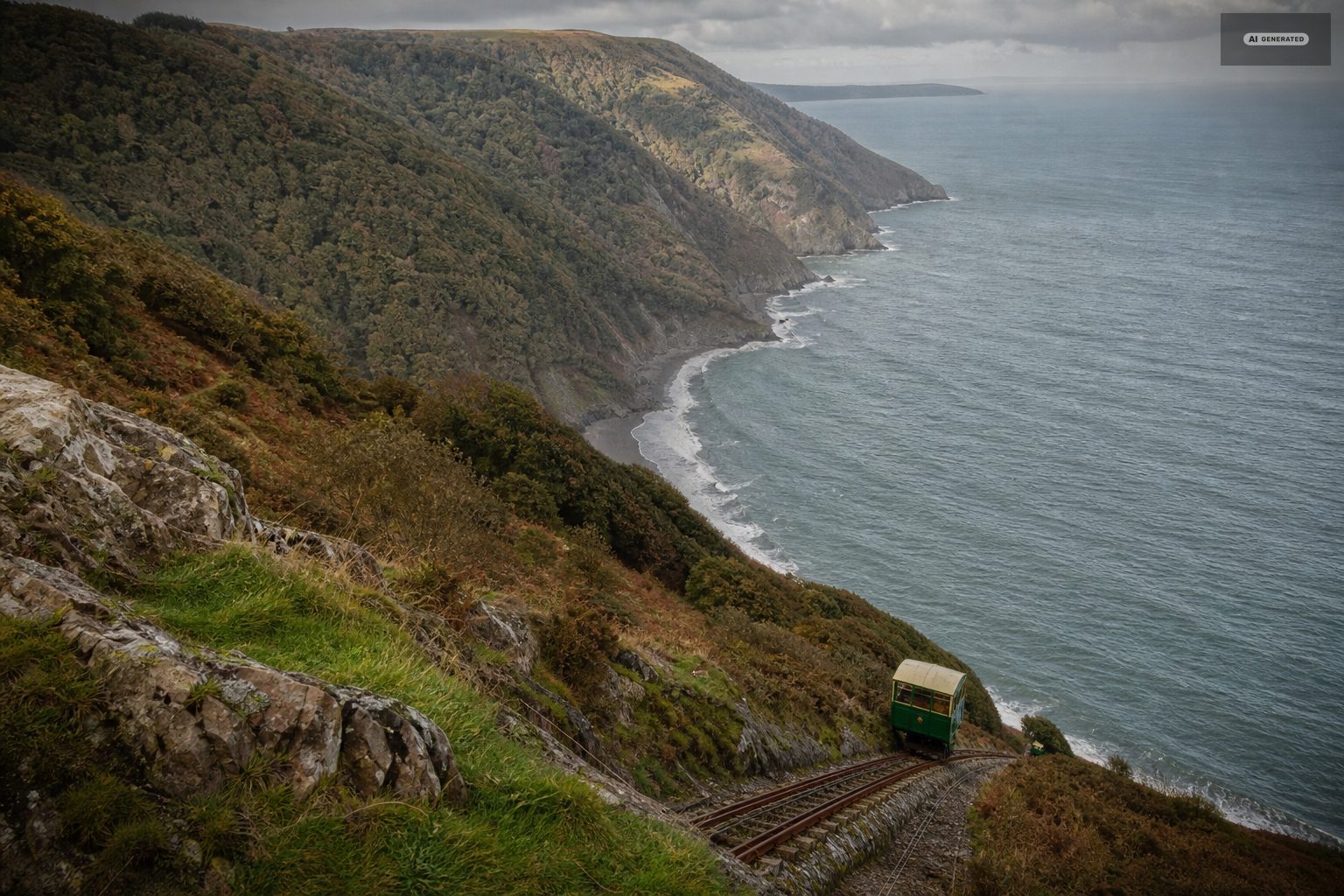
Water powered funiculars were not unusual in the Victorian period. Almost all of them were converted to electricity or closed. This one kept running on water because the water was there, the gradient suited it, and nothing about the arrangement ever stopped working. It is the highest and steepest fully water-powered railway in the world, and the reason is less a conservation decision than an absence of any reason to change it.
It survived because the geography never stopped suiting it. The West Lyn provides the water by gravity, the cliff provides the gradient, and neither has needed replacing. A conventional funicular would have needed an engine house, a fuel supply and a century of upgrades; this one has needed water.
Common questions
How does the Lynton and Lynmouth Cliff Railway work?
Two carriages are joined by a cable over a pulley at the top. The upper carriage fills a water tank until it is heavier than the lower one, descends under its own weight and pulls the other one up. At the bottom the tank empties. There is no engine.
How high does the cliff railway climb?
About 500 feet of vertical rise over roughly 862 feet of track, a gradient of about one in one and three-quarters. The trip takes under two minutes.
When was the cliff railway built?
It opened at Easter 1890 and has run on the same water-balance principle ever since.
Where do you catch the cliff railway?
The lower station is on the Esplanade in Lynmouth, beside the harbour. The upper station is on Lee Road in Lynton, next to the Town Hall.
Is the cliff railway open all year?
No. It runs a full service through the main season and a reduced one at the shoulders, with a winter closure. Hours are set by the operating company, so check before relying on it for a fixed connection.