In the Bristol Channel
Lundy Island: granite, puffins and a day at sea
Three miles of granite eleven miles out in the Bristol Channel, reached by boat from Ilfracombe or Bideford, and visible from this coast on a clear day.
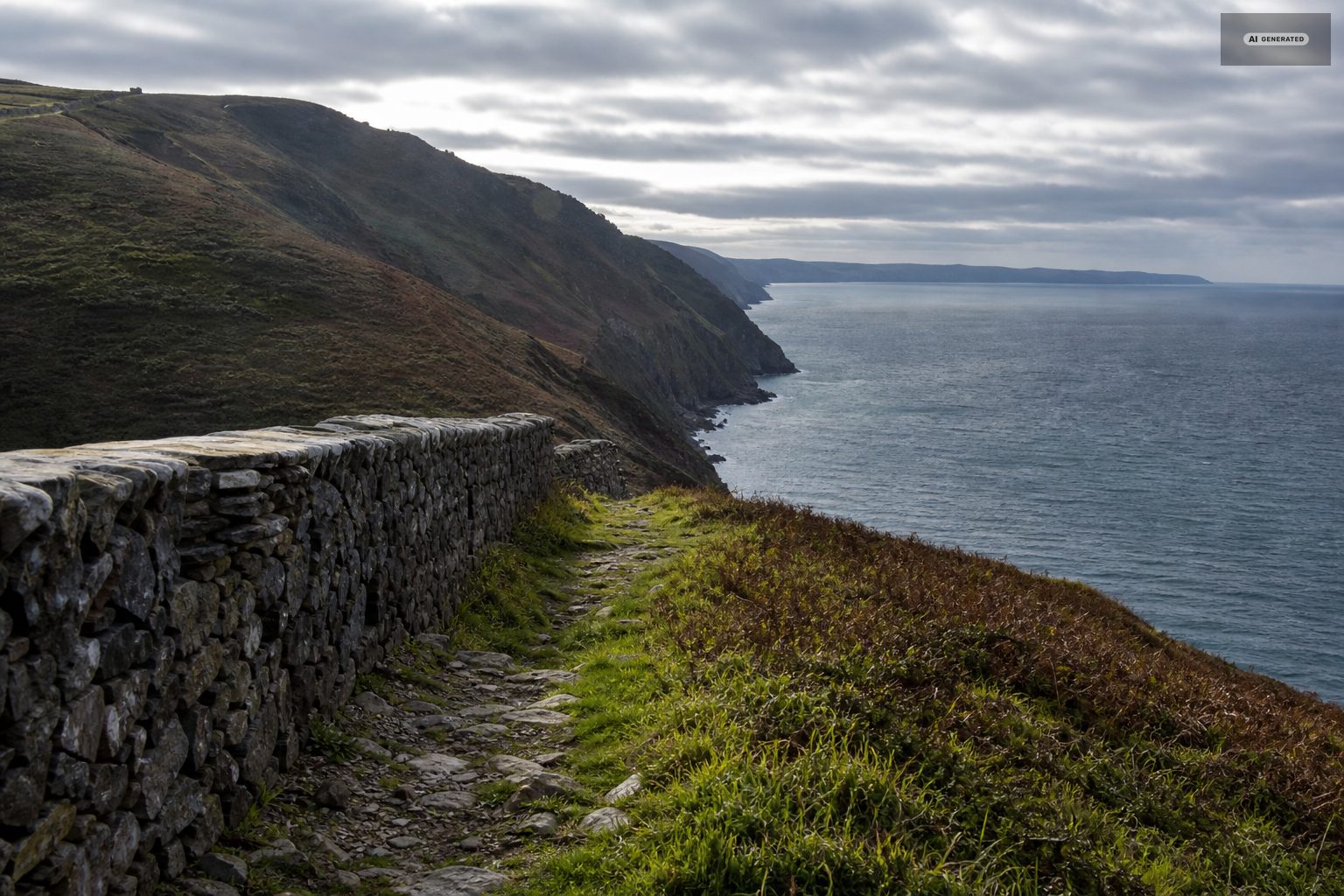
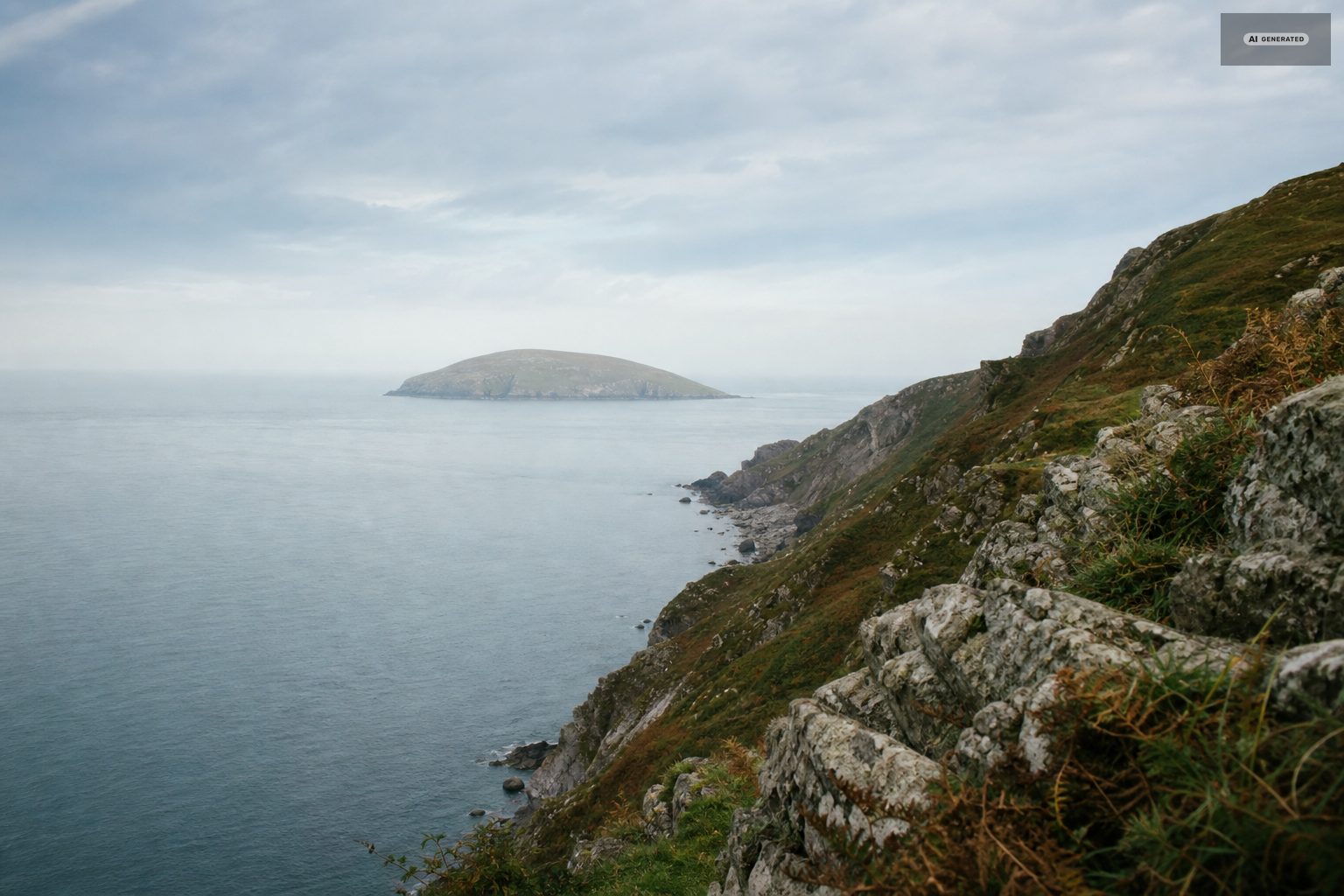
Look north-west from the cliffs above Lynton on a clear day and there is a long low shape on the horizon. That is Lundy: a slab of granite about three miles long standing eleven miles out in the Bristol Channel, with a resident population in double figures and a great deal of wildlife.
-
AI-generated image 01
Getting there
Sailings run from Ilfracombe and Bideford, both between forty minutes and an hour from Lynton by road. The crossing takes around two hours each way, which is the fundamental constraint: a Lundy trip is a full day and a long one, and it starts with a drive.
The service is seasonal and weather-dependent. The Bristol Channel has an enormous tidal range and gets rough quickly, and sailings are cancelled when conditions require it. Book ahead, confirm the day before, and have a plan for what you will do instead.
Helicopter flights operate in the winter months when the boat does not run.
-
AI-generated image 02
What is on the island
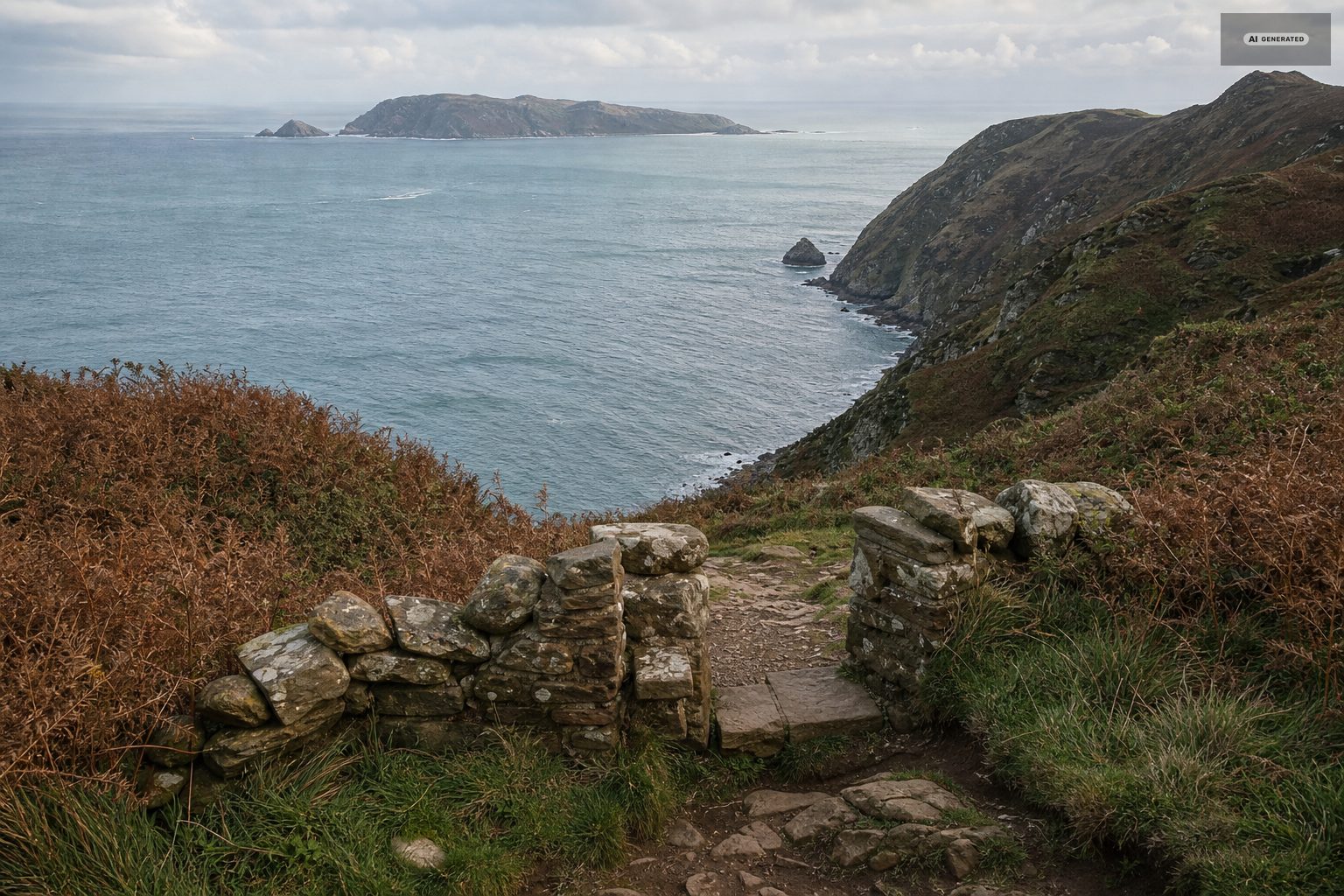
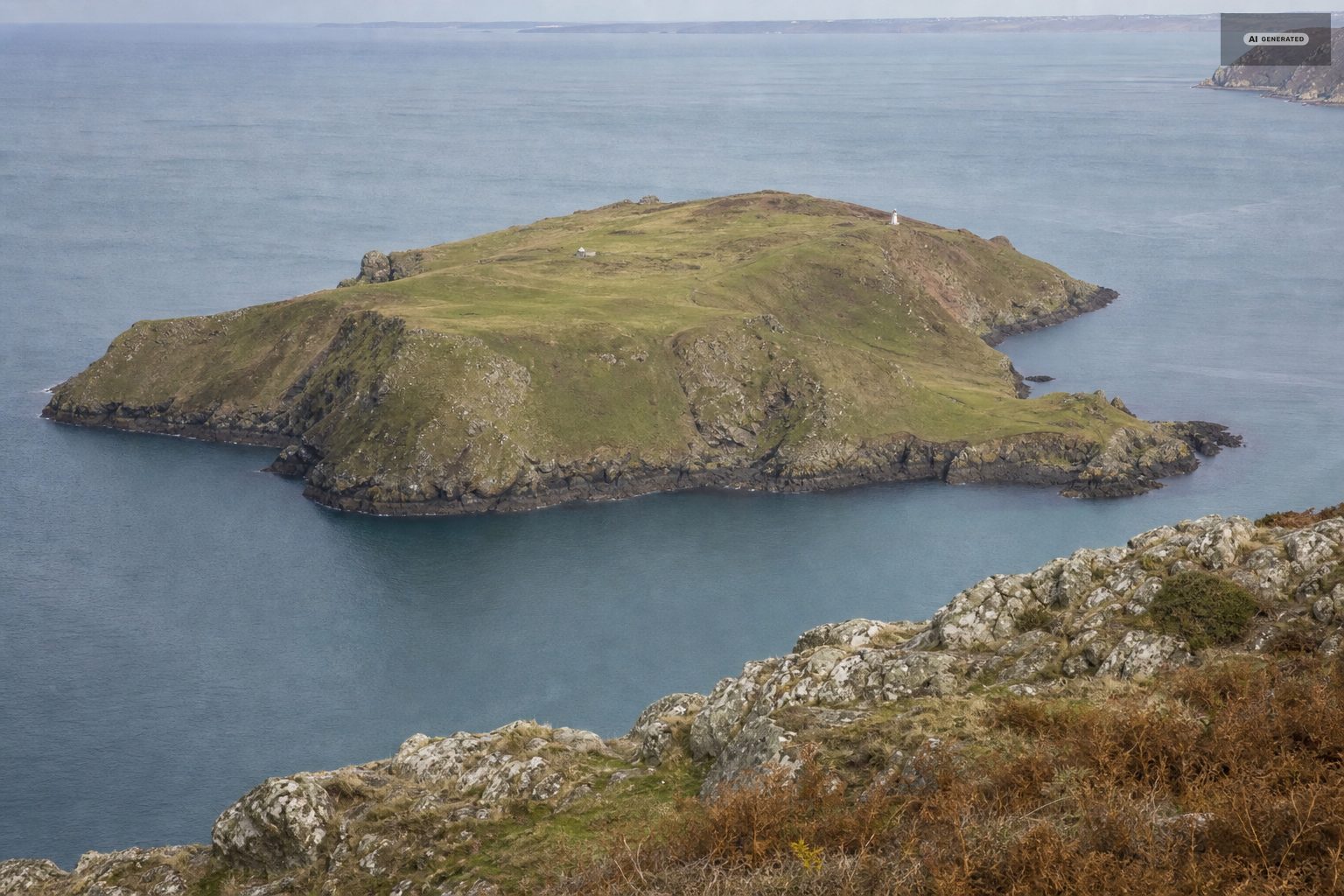
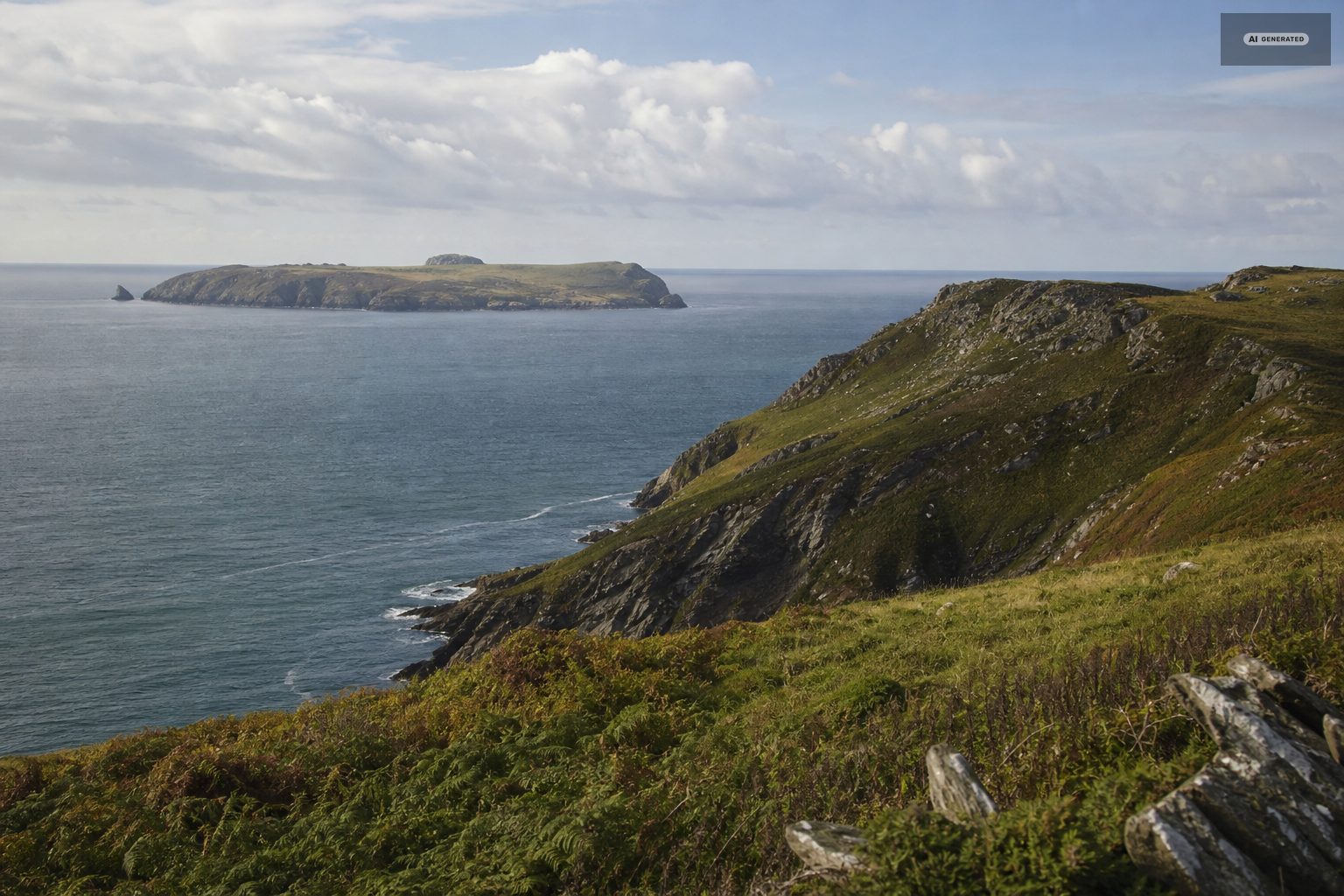
A village at the southern end with a church, a pub and a shop, a lighthouse at either end, the remains of a castle, and then three miles of open granite plateau falling in cliffs on the western side. Walking the length of the island and back is the standard day and fills the time between sailings comfortably.
The western cliffs take the full weight of the Atlantic and are the more dramatic side. The eastern side is more sheltered and holds most of the vegetation.
The island is three miles long and half a mile wide, with a single track running its length, one pub, a shop, a church and a scatter of buildings around the old farm and the lighthouses. There are no cars and no street lights. Everything worth seeing is reachable on foot in a day, which is exactly the right amount for the time the boat allows.
-
AI-generated image 03
Wildlife
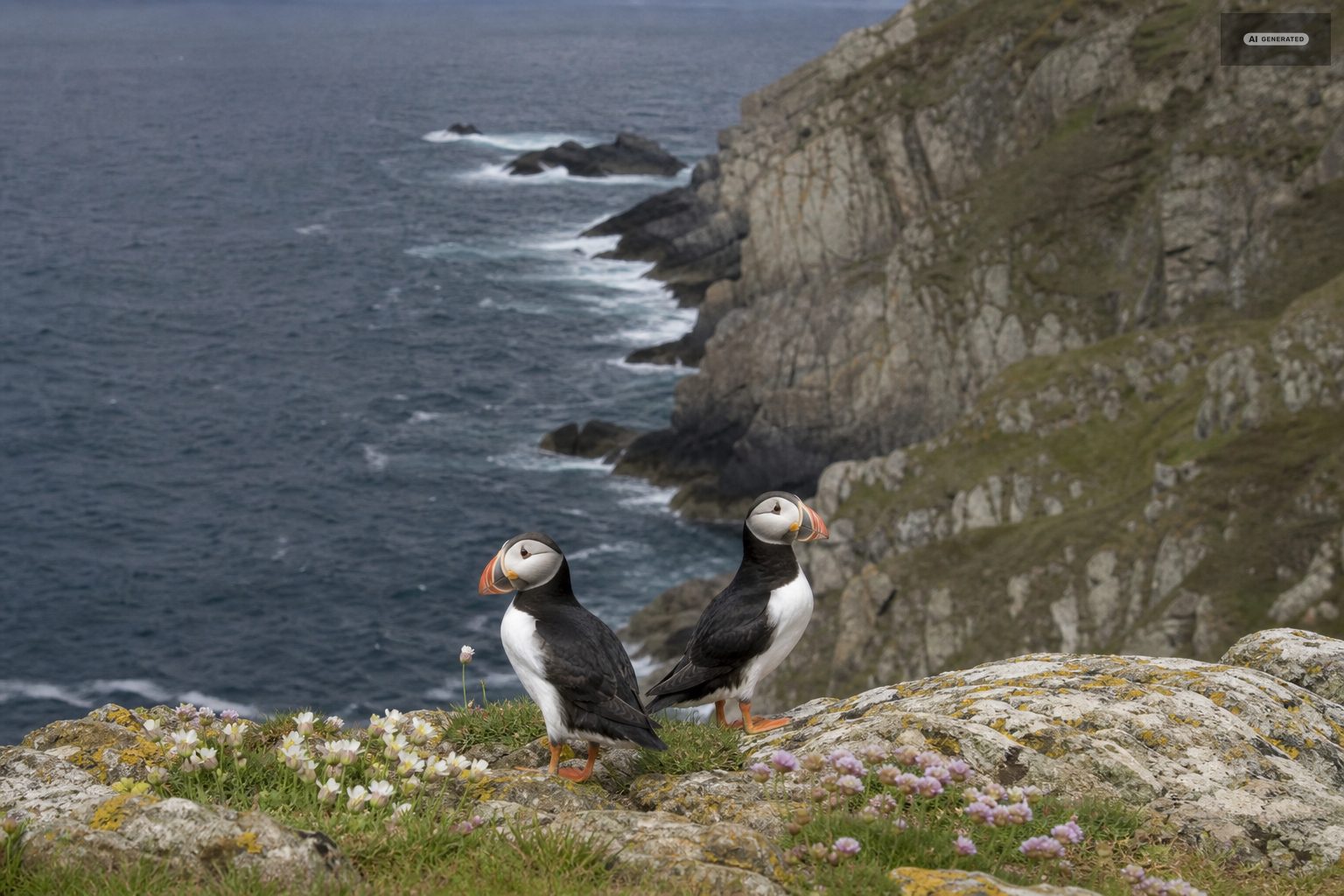
Puffins are the draw - the island is named for them, from the Norse - and they are present from spring into early summer before going back out to sea. Manx shearwaters, guillemots, razorbills and kittiwakes breed on the cliffs. Grey seals are in the water and on the rocks all year and are entirely unbothered by people.
The waters around Lundy are a Marine Conservation Zone with unusually clear conditions for the Bristol Channel, and the island is a well-known diving destination for that reason.
Lundy gave the puffin its name - the Norse for puffin island - and the birds are still the draw in late spring and early summer, along with guillemots, razorbills and Manx shearwaters on the west side. The water around the island is a Marine Conservation Zone, and grey seals are almost guaranteed at the landing beach; the wild Soay sheep and the Lundy ponies are the land equivalent.
-
AI-generated image 04
Planning a visit
- Time it. Sailing times are set by the tide, not by convenience. Check them before booking anything else for the day.
- Layer up. The island is exposed and the sea crossing is cold even in July.
- Bring lunch. The pub and shop exist but are small and get busy on a day-boat schedule.
- No cars. Everything on the island is on foot. Wear boots.
- Take cash. Signal and card facilities are limited.
Everything about a Lundy day is decided by the boat. Sailings depend on the tide and the weather, the timetable changes through the season, and the crossing takes about two hours each way from the mainland - which, added to the drive from Lynton, makes this a long day out rather than an afternoon. In winter the ship is replaced by a helicopter service.
-
AI-generated image 05
Staying on the island
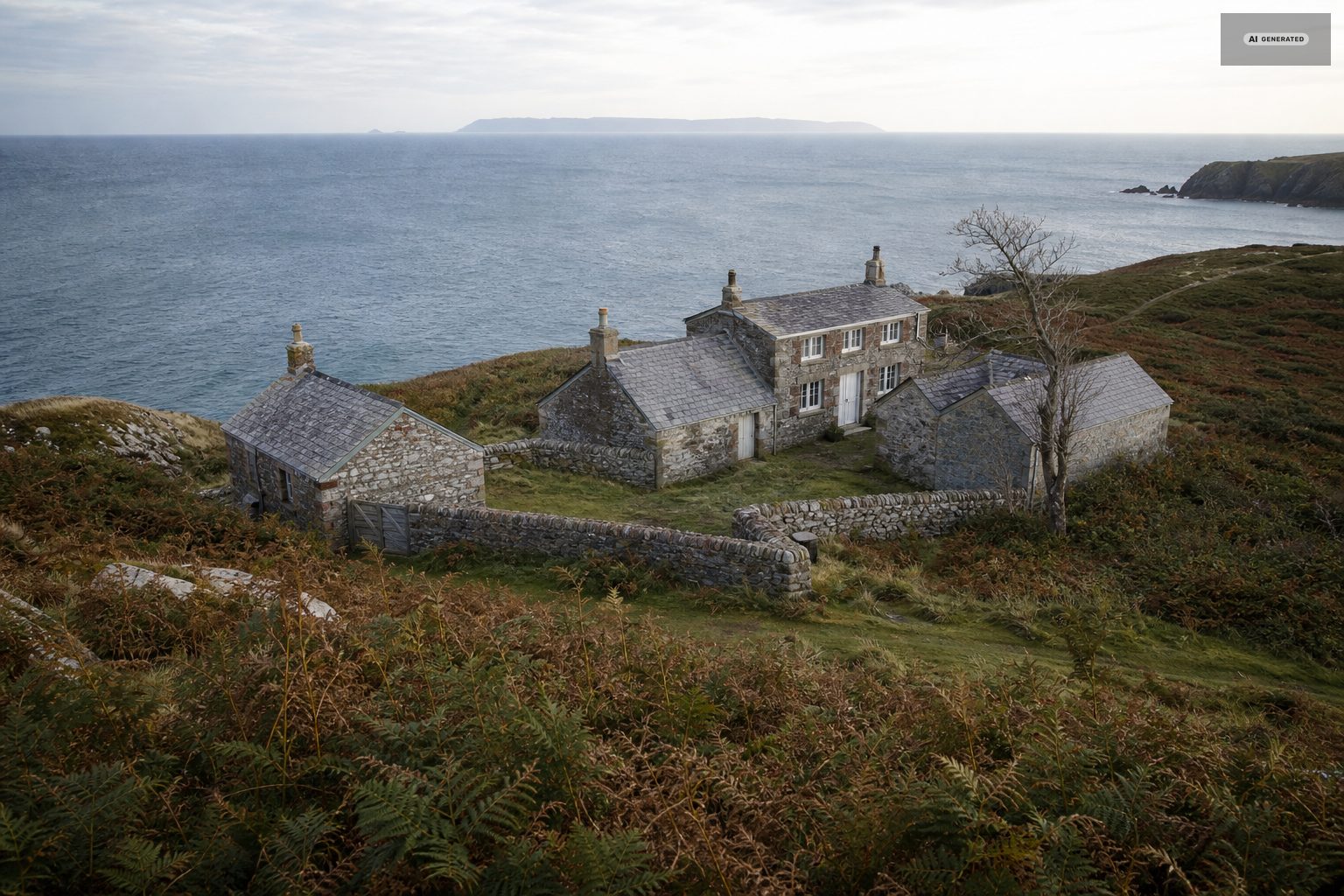
Lundy has a range of accommodation, from a lighthouse keeper’s cottage to a castle keep, let through the organisation that manages the island. Staying overnight is a completely different experience from a day trip: the day boat leaves, the island empties, and what is left is very quiet and very dark. It books up a long way ahead.
Staying overnight changes the visit completely. The island has a small range of self-catering properties in the old buildings, a tavern and a shop, no cars and no light pollution, and the day-trippers leave in the afternoon. Availability is limited enough that popular weeks go a long way ahead.
-
AI-generated image 06
Is it worth it from Lynton?
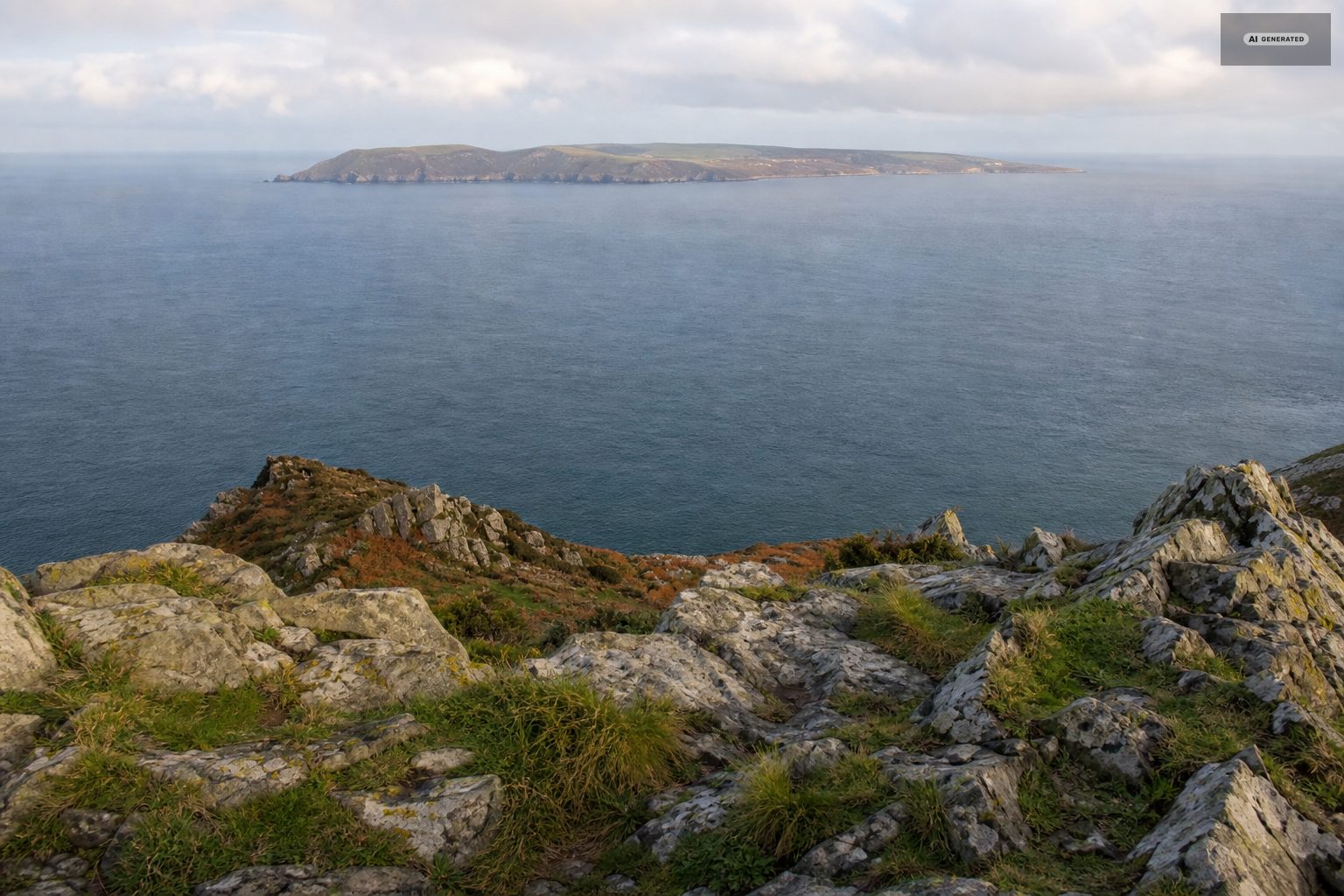
It is a long day - an hour’s drive, two hours at sea, most of the day ashore, and the same back. If you have a week here and one settled forecast, it is one of the best days available on this coast. If you have two days, spend them on Exmoor and the Valley of the Rocks instead.
It is worth it if you treat it as its own trip rather than a side excursion. The drive to the port, the crossing, four or five hours ashore and the crossing back is a full day; done deliberately, it is one of the best days available on this coast, and rushed, it is a lot of travelling to look at a hill.
Common questions
How do you get to Lundy Island?
By boat from Ilfracombe or Bideford, both under an hour from Lynton by road. The crossing takes about two hours each way and the service is seasonal and weather-dependent. Helicopter flights run in winter.
Can you see puffins on Lundy?
Yes, from spring into early summer, before they return to open sea. The island takes its name from the Norse word for them.
Can you stay overnight on Lundy?
Yes - the island has a range of properties from a lighthouse keeper’s cottage to a castle keep. They book up a long way in advance.
How far is Lundy from Lynton?
The island is about eleven miles offshore and visible from the cliffs on a clear day, but the sailings leave from Ilfracombe and Bideford, forty minutes to an hour away by road.