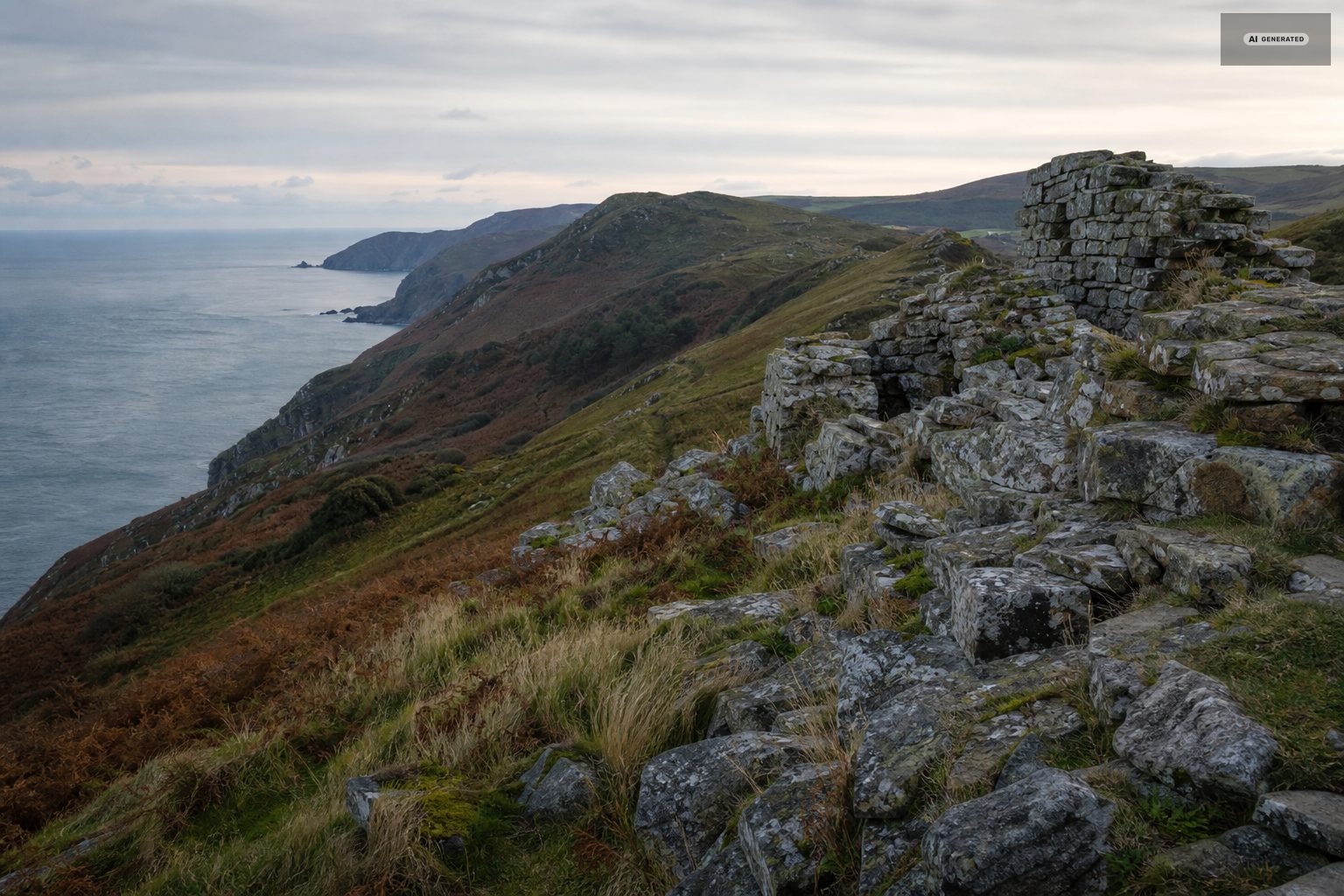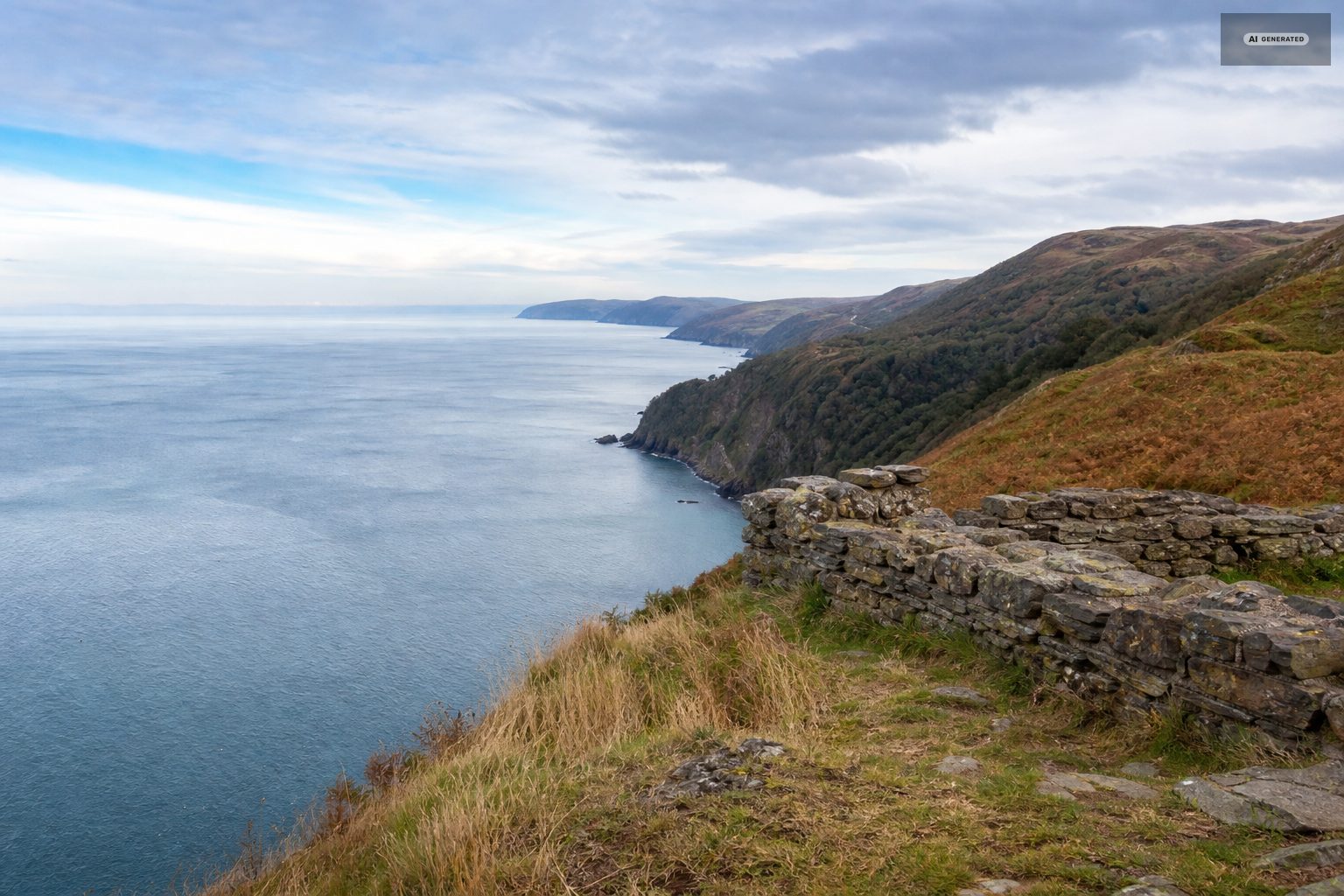
Two thousand years, briefly
The history of Lynton and Lynmouth
A fishing harbour, a lime trade, a war that closed the Continent, a railway that ran on water, and one night in 1952.
For most of their history these were two small, poor, hard-to-reach settlements on a coast that had no natural reason to prosper. What changed them was a war, a fashion in poetry, and eventually a piece of Victorian engineering.
-
AI-generated image 01
Before the visitors
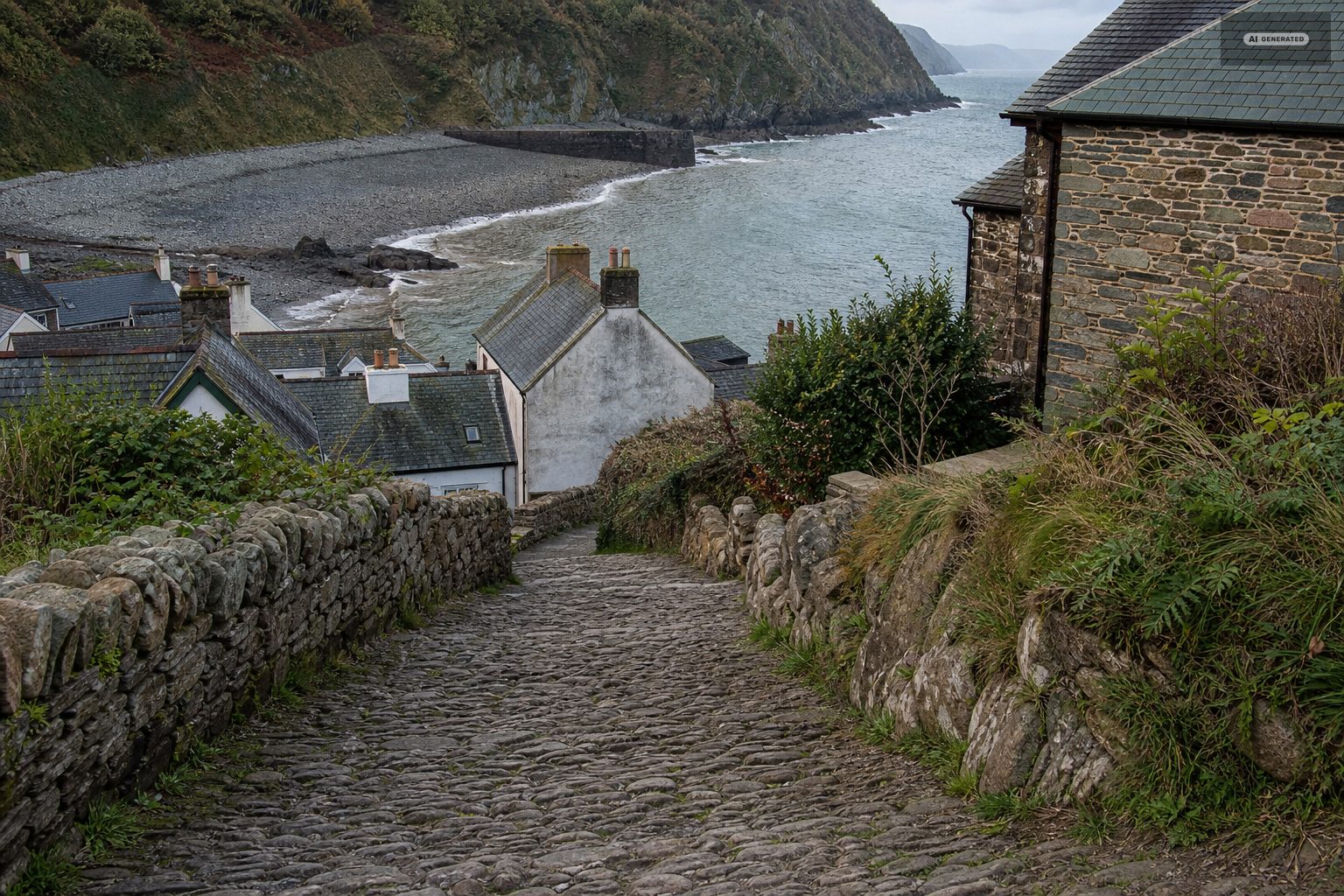
Both places are recorded in Domesday in 1086, and the pattern that followed was the ordinary one for this coast. Lynmouth had the harbour and lived on fish - the herring fishery was substantial enough in the seventeenth and eighteenth centuries to matter to the local economy, and then it collapsed, as herring fisheries do. Lime burning ran alongside it: limestone and culm shipped across from Wales, burnt in kilns on the shore, and spread on acid moorland fields to make them farmable.
Lynton, on the clifftop, was the farming settlement and the parish centre. The two were connected by a road that was punishing in both directions, which is the fact that shaped everything until 1890.
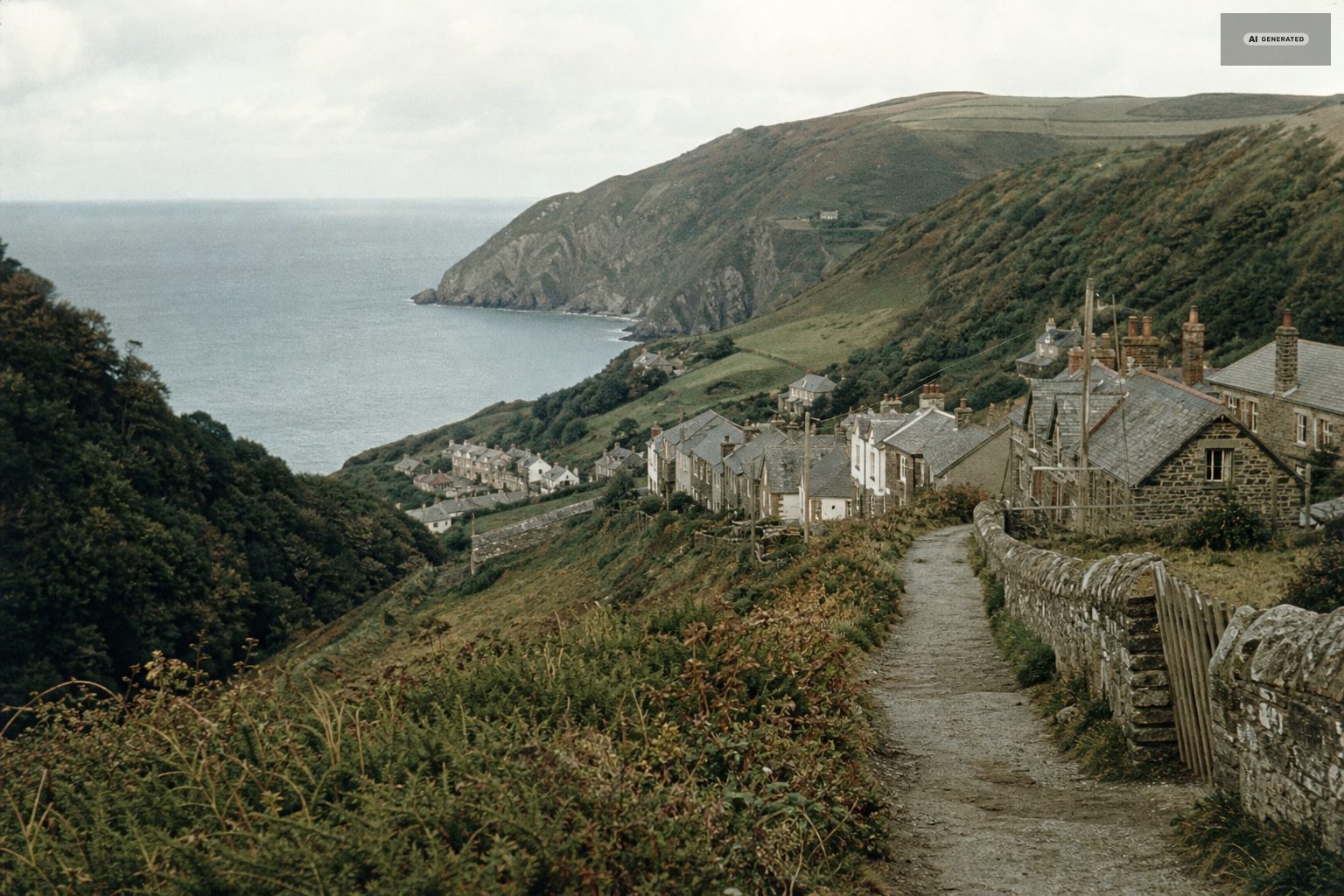
Before the resort, both settlements lived off what was within reach: herring and small-boat fishing at the harbour, sheep and cattle on the moor above, and the two rivers turning mills. Lynmouth was the working village and Lynton the parish above it, and neither had any reason to be famous.
-
AI-generated image 02
How the resort began
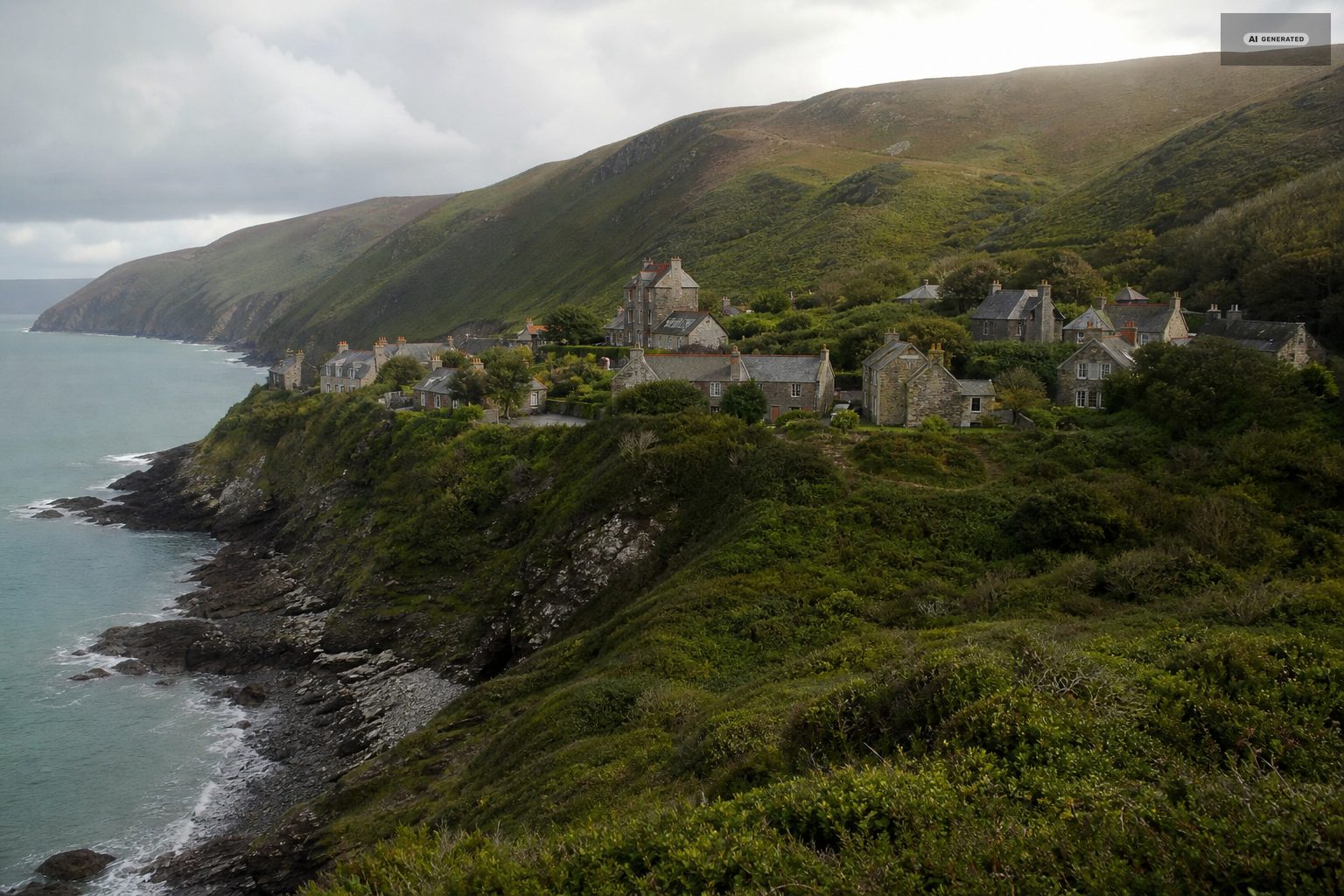
The turning point was the Napoleonic Wars. With the Continent closed to English travellers, the picturesque tour turned inward, and a coast with six-hundred-foot cliffs, wooded gorges and dramatic weather was exactly what the taste of the period wanted. The Romantic poets came - Coleridge and Wordsworth walked this coast, and Shelley brought his household to Lynmouth - and what they wrote brought others.
The Victorians gave the place its nickname: Little Switzerland, or the Alps of England. Hotels went up on the Lynton clifftop for the view, villas followed, and by the second half of the century this was an established resort with a season.
The turn came with the roads, the coastal steamers and the Victorian appetite for scenery. Once visitors could arrive without a two-day journey over the moor, the villas, hotels and clifftop walks followed within a generation, and by the end of the century the twin villages were an established destination with a railway of their own to prove it.
-
AI-generated image 03
The engineering
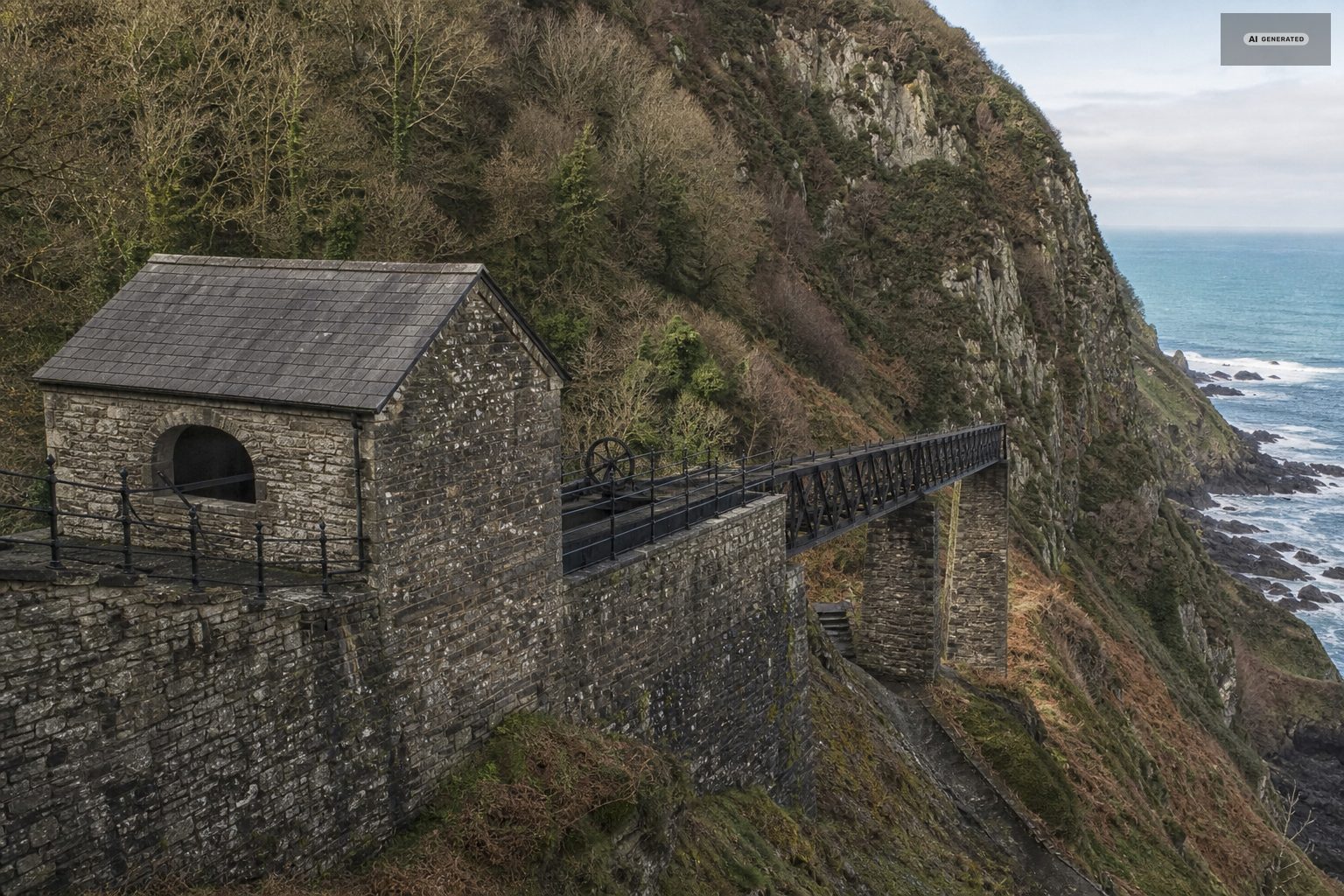
The problem remained the five hundred feet between the harbour and the town. In 1890 the cliff railway opened, a water-balanced funicular with no engine of any kind, and it solved the problem so completely that it is still doing it on the original principle. Lynton Town Hall, completed in 1900, gave the upper village a civic centre and for many years housed the tourist information office.
The Lynton and Barnstaple narrow-gauge railway opened in 1898 and closed in 1935, and its trackbed is still readable in places across the country south of the villages.
Almost everything visible here is engineering in response to the same problem: the five hundred feet between the two villages. The cliff railway is the elegant answer, the zigzag of the road is the brute one, and the North Walk cut along the cliff face is the Victorian compromise - a level promenade in a place with no level ground.
-
AI-generated image 04
1952
On the night of 15 August 1952, after nine inches of rain fell on a saturated Exmoor, the East and West Lyn came down together and destroyed a large part of Lynmouth. Thirty-four people died. The village was rebuilt around a widened, walled river channel designed to carry the same flood again, and that channel is the most visible thing about Lynmouth today. The full account is in the 1952 flood.
The flood is the hinge in the village's history. It killed thirty-four people, destroyed or damaged a large part of Lynmouth and removed buildings that had stood since the fishing years, and everything visible in the village today is either what survived it or what was built afterwards. The widened river channel, the open ground where houses once stood and the rebuilt Rhenish Tower are all the same event seen from different angles.
-
AI-generated image 05
What is left to see
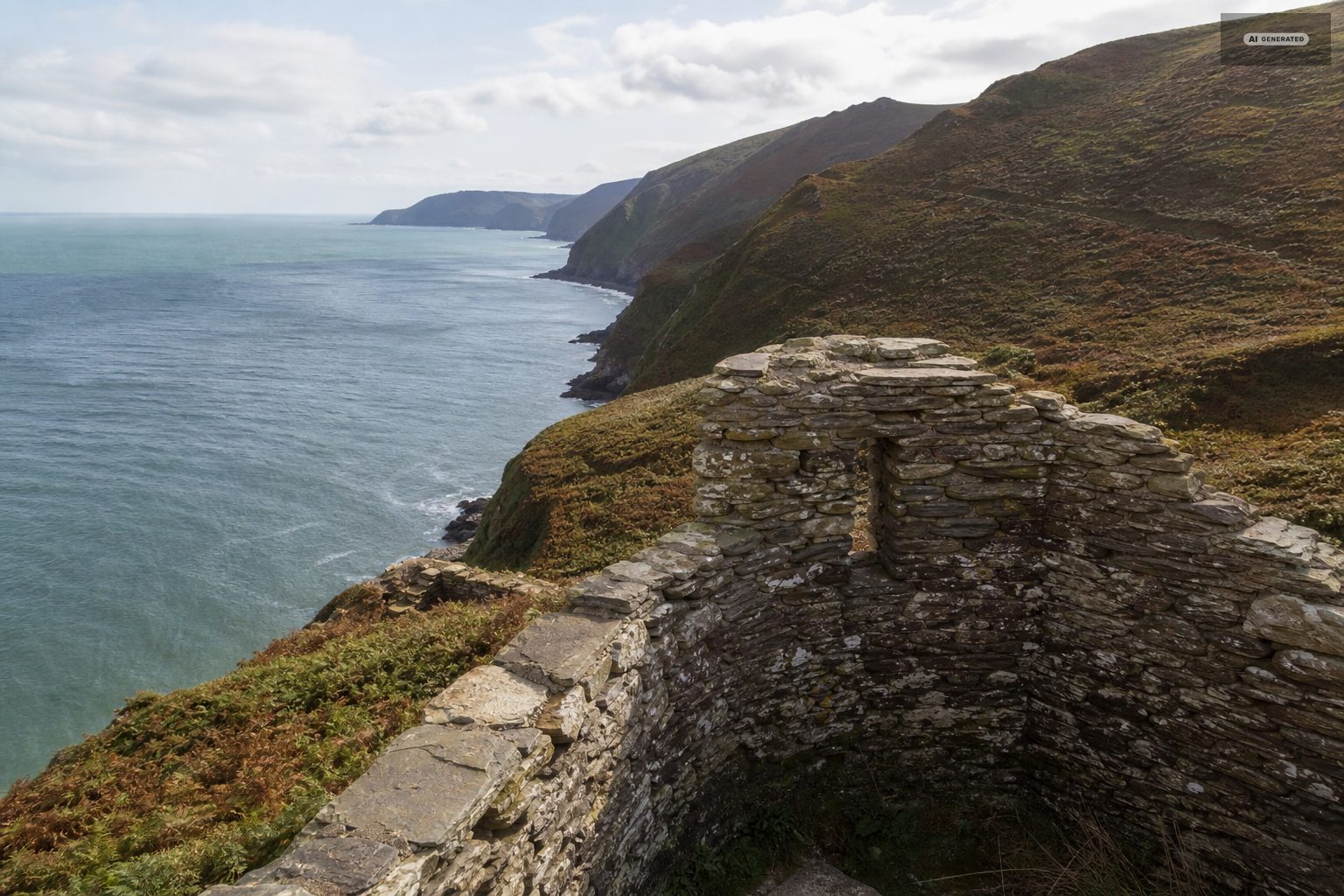
The Rhenish Tower on the harbour wall, rebuilt in 1954 after the flood destroyed the nineteenth-century original. The lime kiln remains along the shore. The Victorian hotels on the Lynton slope, still doing what they were built for. The Town Hall. And the cliff railway, which is the rare case of a historic structure that has never stopped being useful.
Most of it is still in plain sight: the cliff railway working on its original principle, the harbour wall and the tower at the end of it, the Victorian villas on the Lynton slope, and the church towers at Lynton and Countisbury that predate the whole resort era. The Flood Memorial Hall ties the two halves of the story together in half an hour.
Common questions
How old are Lynton and Lynmouth?
Both settlements are recorded in Domesday in 1086. For most of their history they lived on fishing, farming and lime burning; the resort era began around 1800.
Why did Lynton and Lynmouth become a tourist destination?
The Napoleonic Wars closed the Continent to English travellers, the picturesque tour turned inward, and the Romantic poets publicised a coast that suited the taste of the time. The Victorians named it Little Switzerland and built hotels for the view.
What was the Lynton and Barnstaple Railway?
A narrow-gauge line that opened in 1898 and closed in 1935. Its trackbed is still readable in places in the country south of the villages.
Why is Lynmouth called Little Switzerland?
The Victorians gave the pair the name - also the Alps of England - for the height of the wooded cliffs, the gorges and the vertical drop between the two villages.