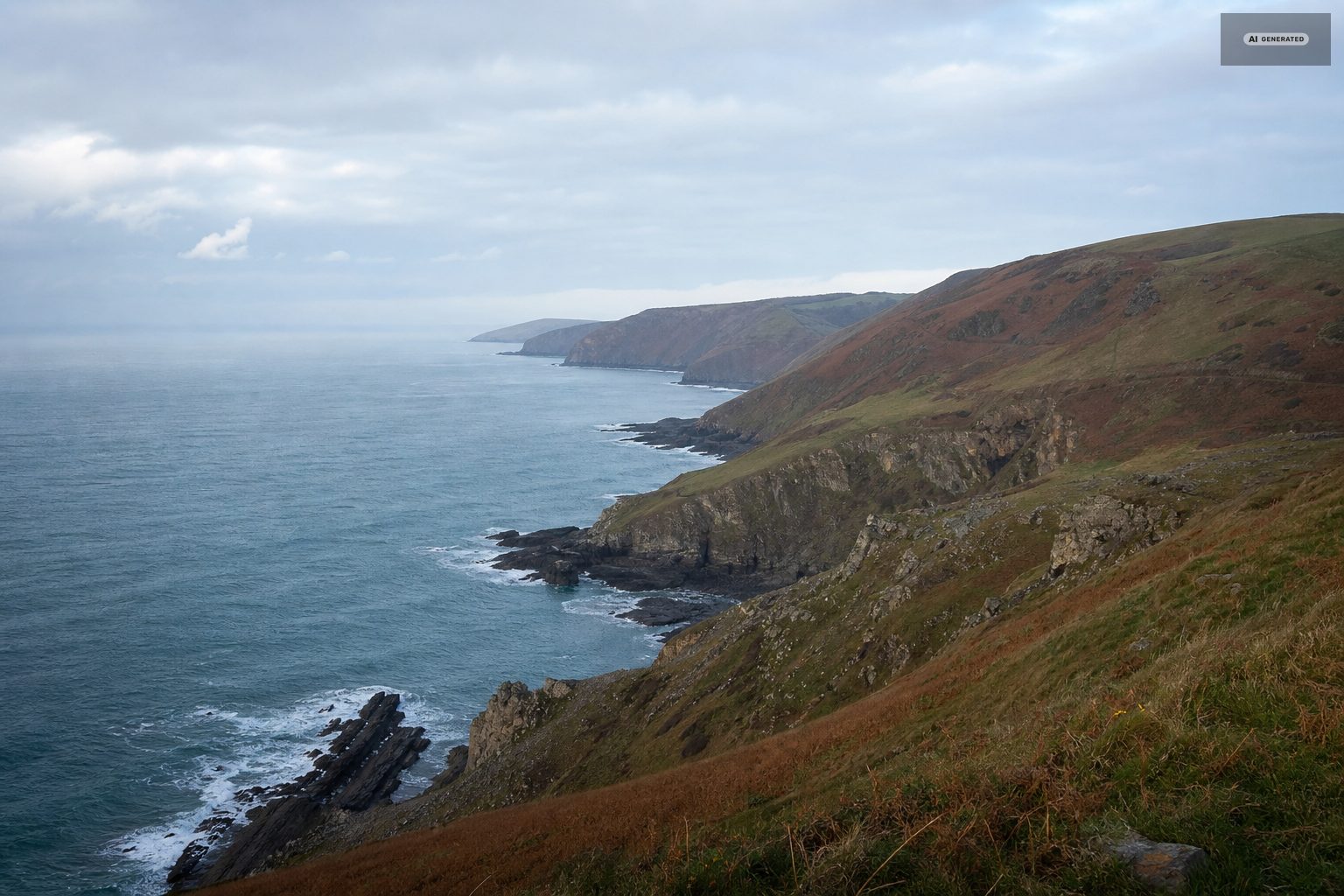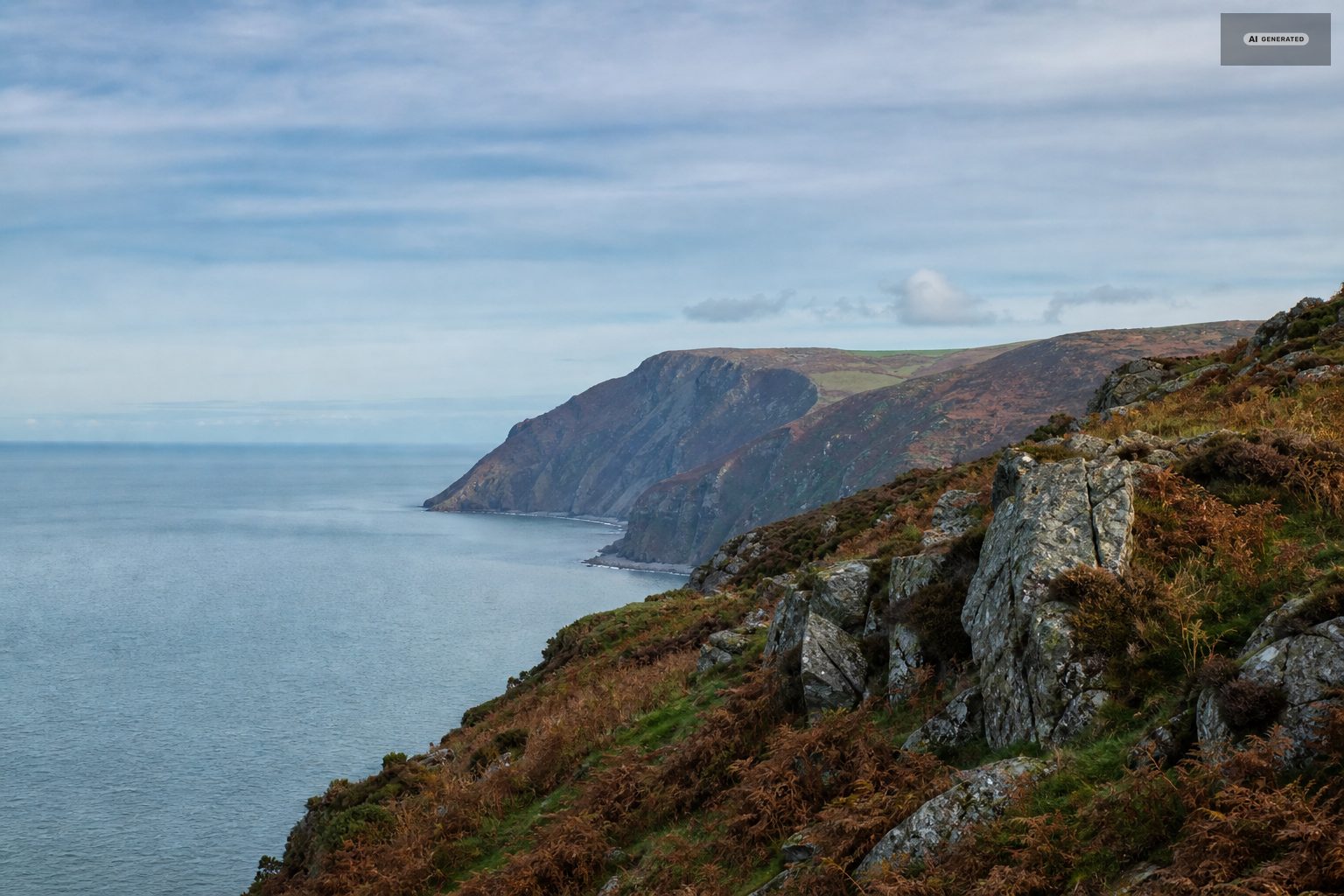
Out on the moor
Staying outside the villages: inns and farmhouses on Exmoor
Quieter, usually cheaper, better for dogs and long walks, and completely dependent on a car.
The villages are not the only option and, for some kinds of trip, not the best one. Within twelve miles of Lynton there are inns at the heads of valleys, farmhouses that have taken guests for generations, and small country hotels with more land than the coastal ones can manage.
-
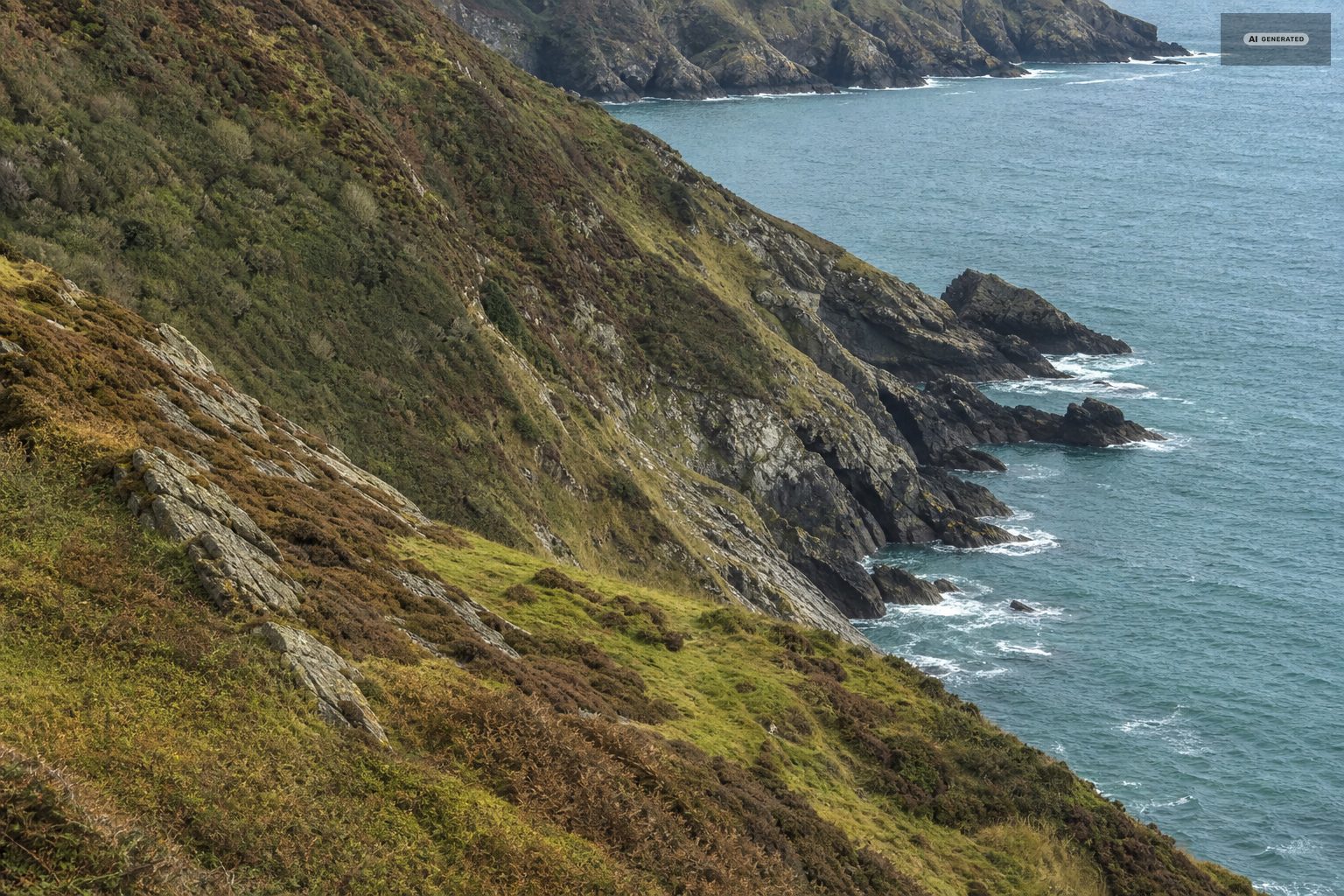
AI-generated image 01
Close in
Countisbury
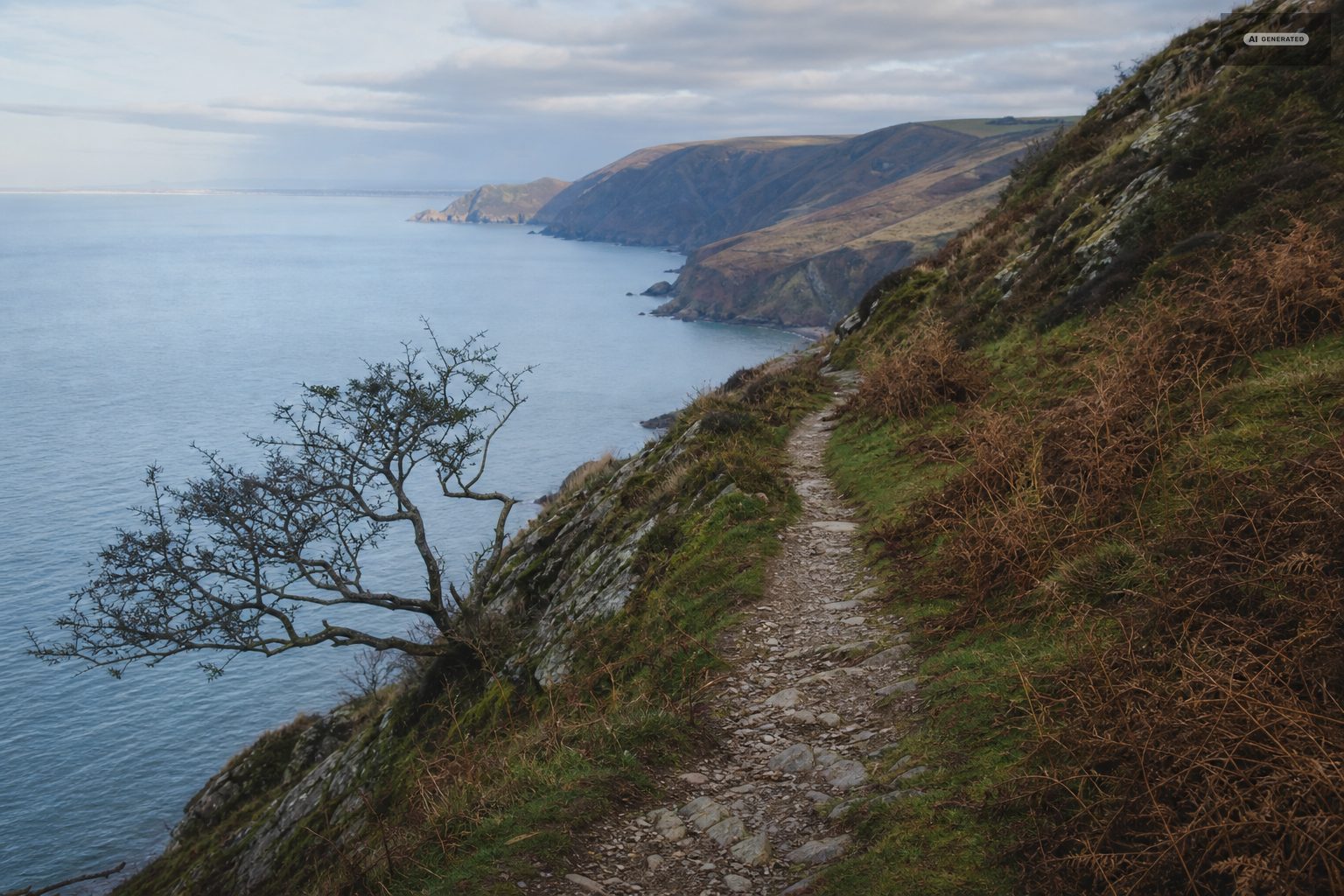
A mile east and several hundred feet up, on the coast path and directly above Lynmouth. Close enough to walk down and use the road or a lift back.
Brendon and Rockford
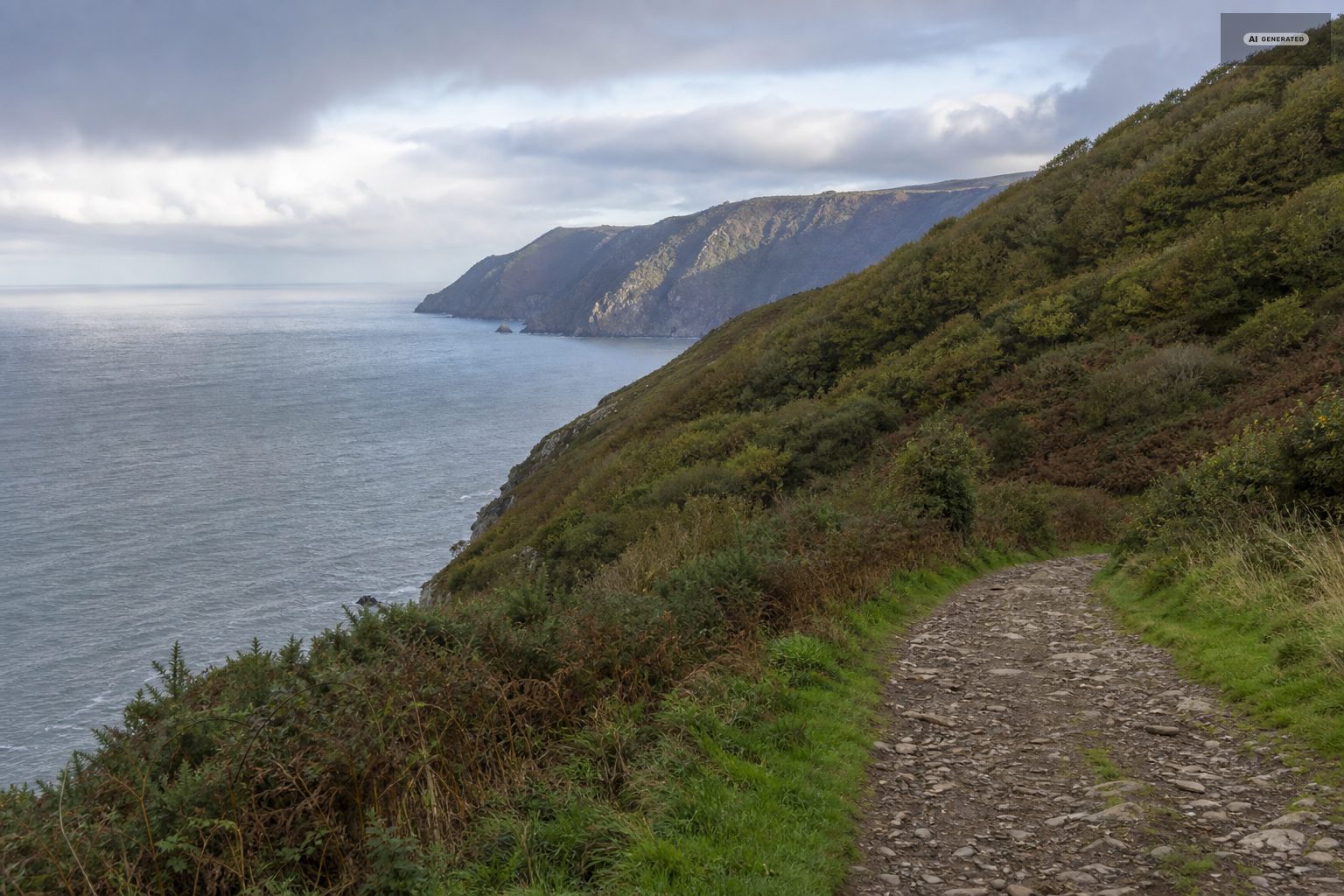
In the East Lyn valley above Watersmeet, three to five miles from Lynmouth by road and walkable along the river. Both have inns on the water, and both sit on the way into Lorna Doone country.
Martinhoe, Parracombe and the Heddon Valley
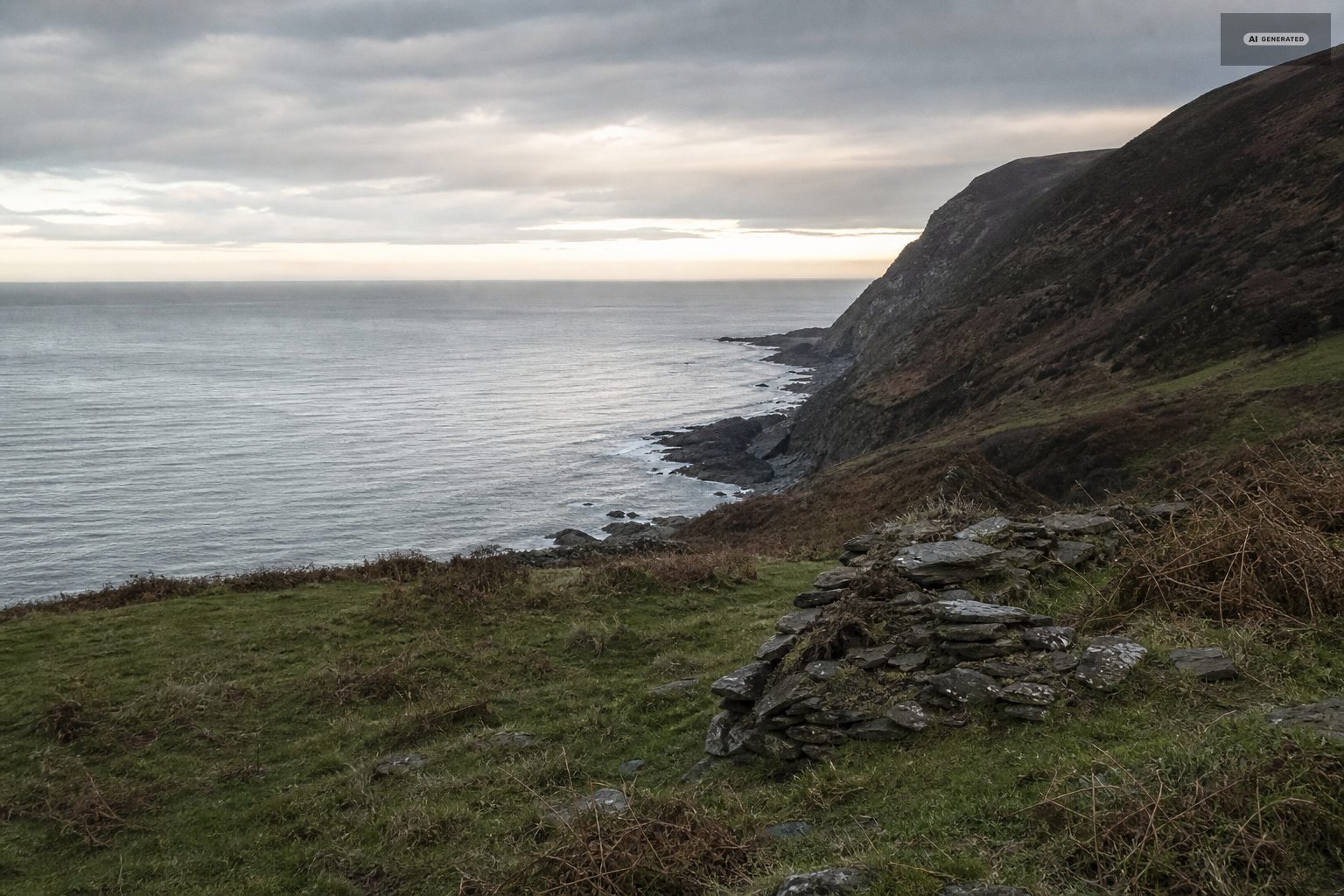
West and south of Lynton, three to six miles out. Hanging oak woods, a very quiet stretch of coast, and the Hunter's Inn at the bottom of the Heddon Valley.
-
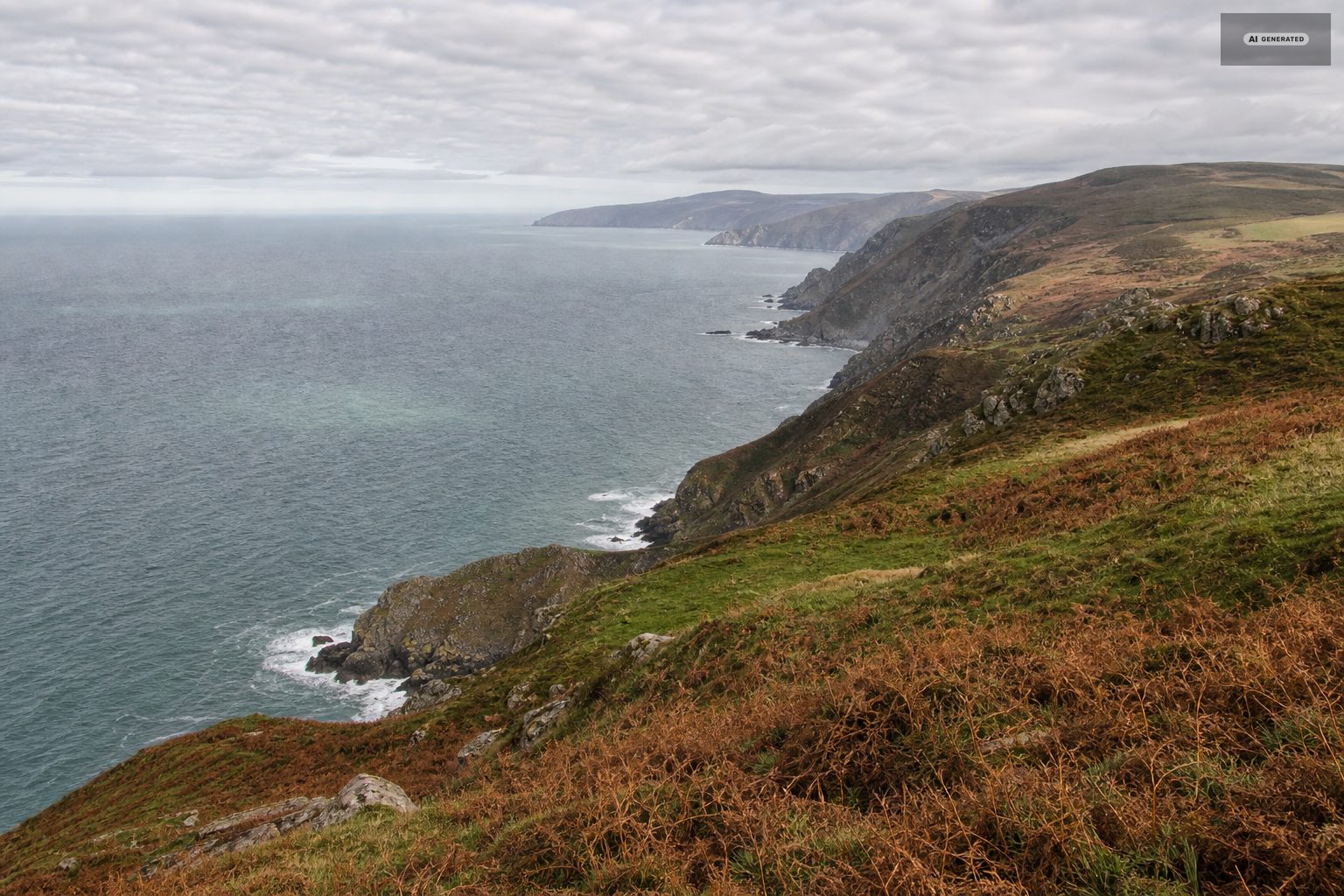
AI-generated image 02
Further out
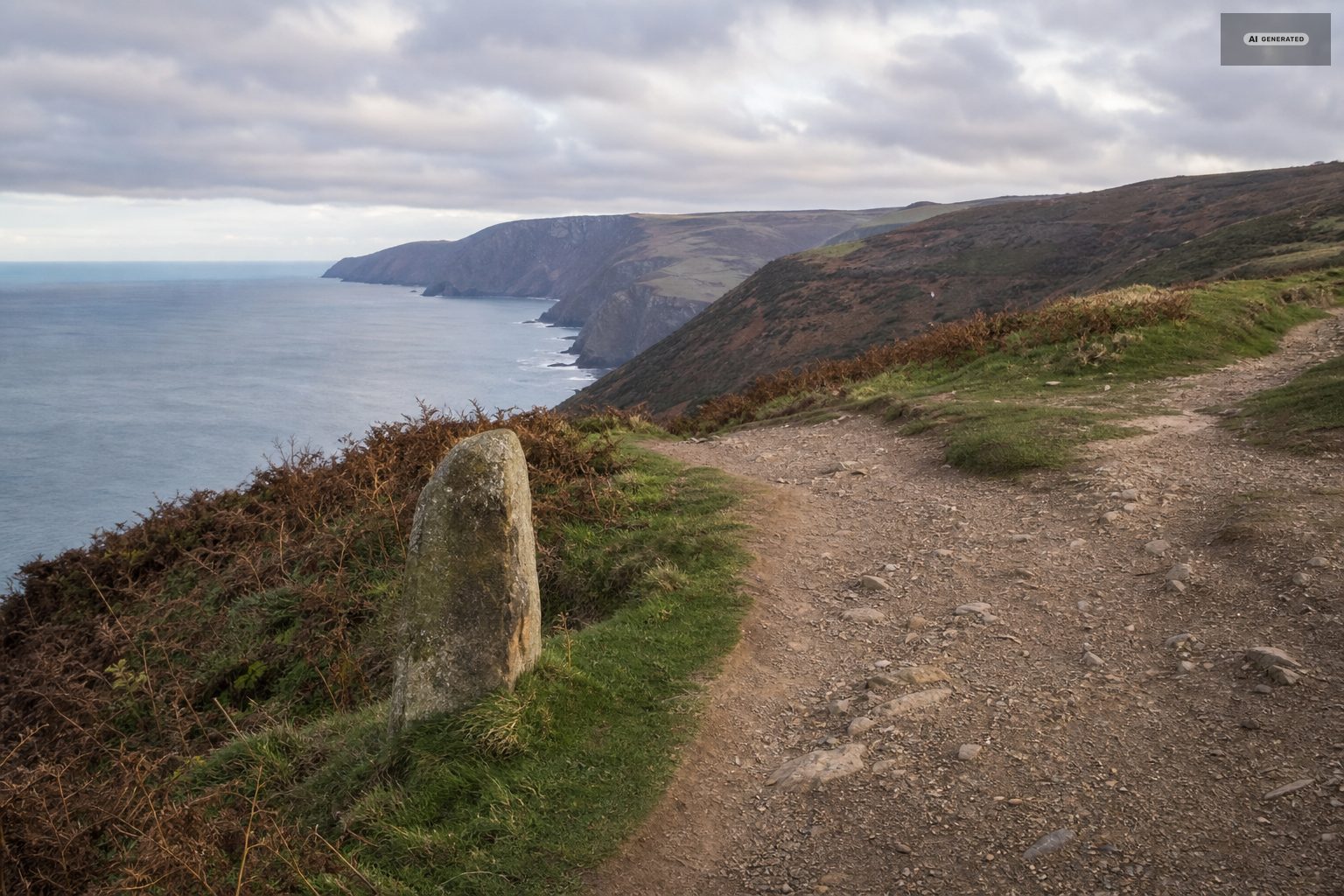
Simonsbath, Exford and Withypool sit in the middle of the moor, roughly ten to fifteen miles from the coast, and are the natural base for riding and for long moorland walks. Porlock, twelve miles east over Countisbury and down Porlock Hill, gives the Somerset side of the coast and its own harbour at Porlock Weir. Combe Martin, west along the A39, is the closest thing to a seaside resort in the area.
Twenty minutes inland the character changes completely. The valleys around Brendon, Rockford and Malmsmead are farming country with a scatter of small inns and farmhouses; up on the moor at Simonsbath and Exford the settlements are smaller again and the nearest shop can be a drive. Both are quieter than the villages and both need a car.
-
AI-generated image 03
What you gain
- Quiet. No day-visitor traffic, and in most cases no traffic at all after dark.
- Dark skies. Exmoor was the first International Dark Sky Reserve in Europe, and out here that is not a slogan.
- Space. Farmhouses and inns have parking, drying rooms and somewhere to put boots and a wet dog.
- Value. Generally lower rates than the harbour front for more room.
- Access. You start walks on the moor rather than climbing to them.
-
AI-generated image 04
What you lose
Everything becomes a drive. There is no meaningful bus network between the moorland villages, so an evening meal, a shop or a change of plan all involve the car. The lanes are single track, unlit, hedged and shared with sheep, ponies and farm traffic, and driving them after dark in rain is a skill. Mobile signal is poor to non-existent in the combes.
If nobody in the party wants to drive in the evening, stay in a village with an inn you can walk to, or stay in Lynton or Lynmouth - see where to stay.
-
AI-generated image 05
Getting there
Approach on the A39 from Barnstaple rather than over Countisbury or Porlock Hill if you are towing or driving something old - see getting here. Ask for directions rather than trusting a satellite navigation system to the last mile: it will route you down farm tracks that are technically roads.
Every approach involves a hill. From the east the road climbs Countisbury; from the west it comes over the moor and drops down Lynmouth Hill; from the south the lanes wind up out of the combes. None of it is difficult in an ordinary car in ordinary weather, but it is all slower than the mileage suggests, and in winter the high roads are the first to be affected by ice and the last to be treated.
-
AI-generated image 06
Choosing how far out to go
The distance you can happily put between yourself and the harbour depends almost entirely on whether the party wants to walk to dinner. One mile at Countisbury keeps that option; ten miles at Simonsbath does not, and puts you in the middle of the moor instead, which is a different and equally good holiday. Decide that before comparing prices, because the two ends of the range are not really competing with each other.
The sensible test is how many evenings you want to drive. If the plan is walking days that end in a pub in the village, stay in the village. If the plan is the moor, the dark skies and a fire in the evening, staying out is not a compromise at all.
Common questions
Where can you stay on Exmoor near Lynton and Lynmouth?
Inns and farmhouses at Countisbury, Brendon, Rockford, Martinhoe and Parracombe within a few miles, and further out at Simonsbath, Exford, Withypool and Porlock.
Do you need a car to stay outside Lynton and Lynmouth?
Yes. There is no meaningful bus network between the moorland villages, so meals, shops and any change of plan depend on driving.
Is staying on Exmoor cheaper than in the villages?
Generally, and you get more space with it - parking, drying rooms and somewhere for boots and dogs. The trade is convenience.
What are the roads like on Exmoor at night?
Single track, unlit, hedged, and shared with sheep, ponies and farm traffic. Perfectly manageable, but not something to discover for the first time in rain after dinner.