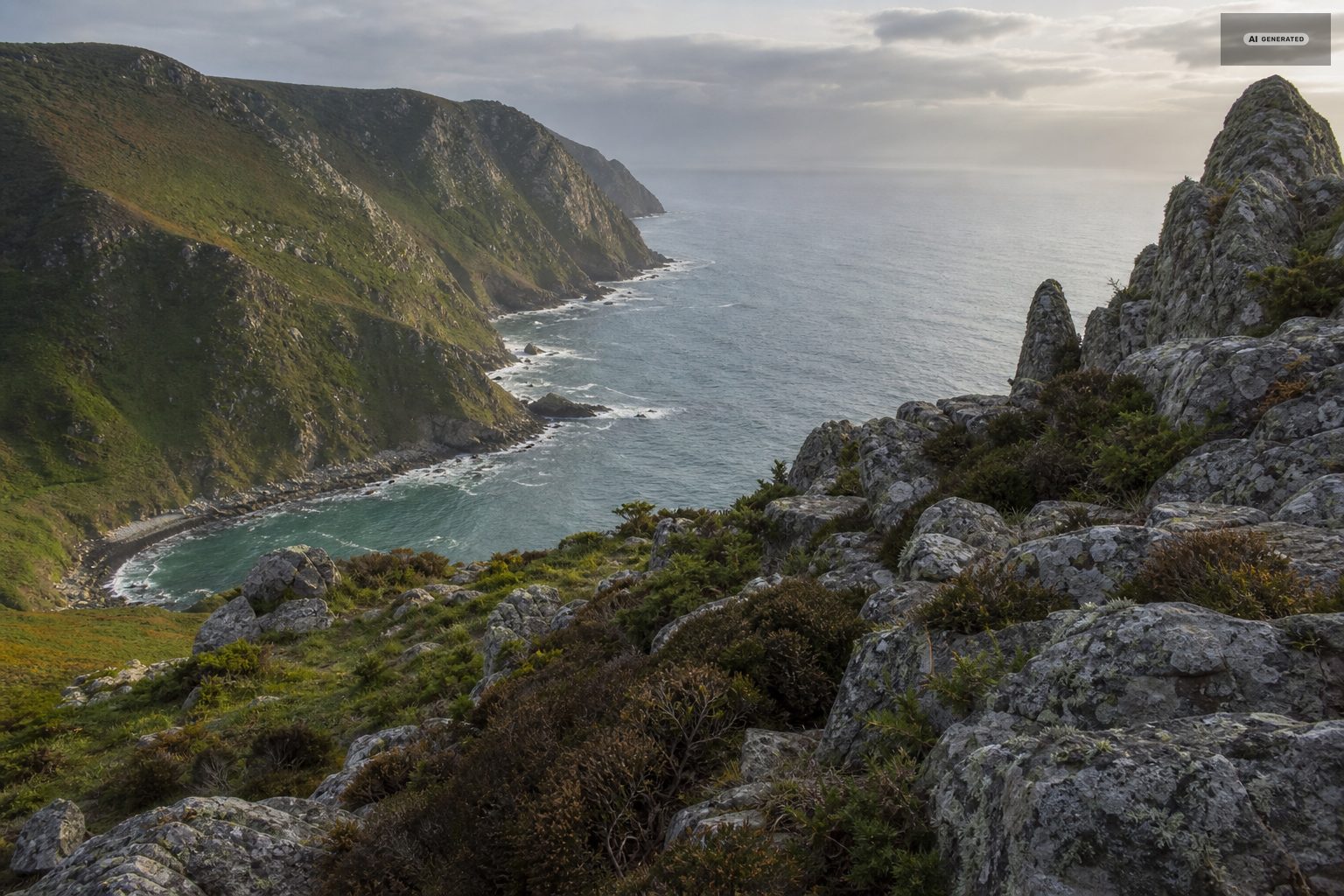
One mile west of Lynton
The Valley of the Rocks near Lynton: a dry valley, a herd of goats and the best short walk on this coast
A valley with no river in it, running parallel to the sea behind a ridge of broken rock, half an hour on foot from the middle of Lynton.
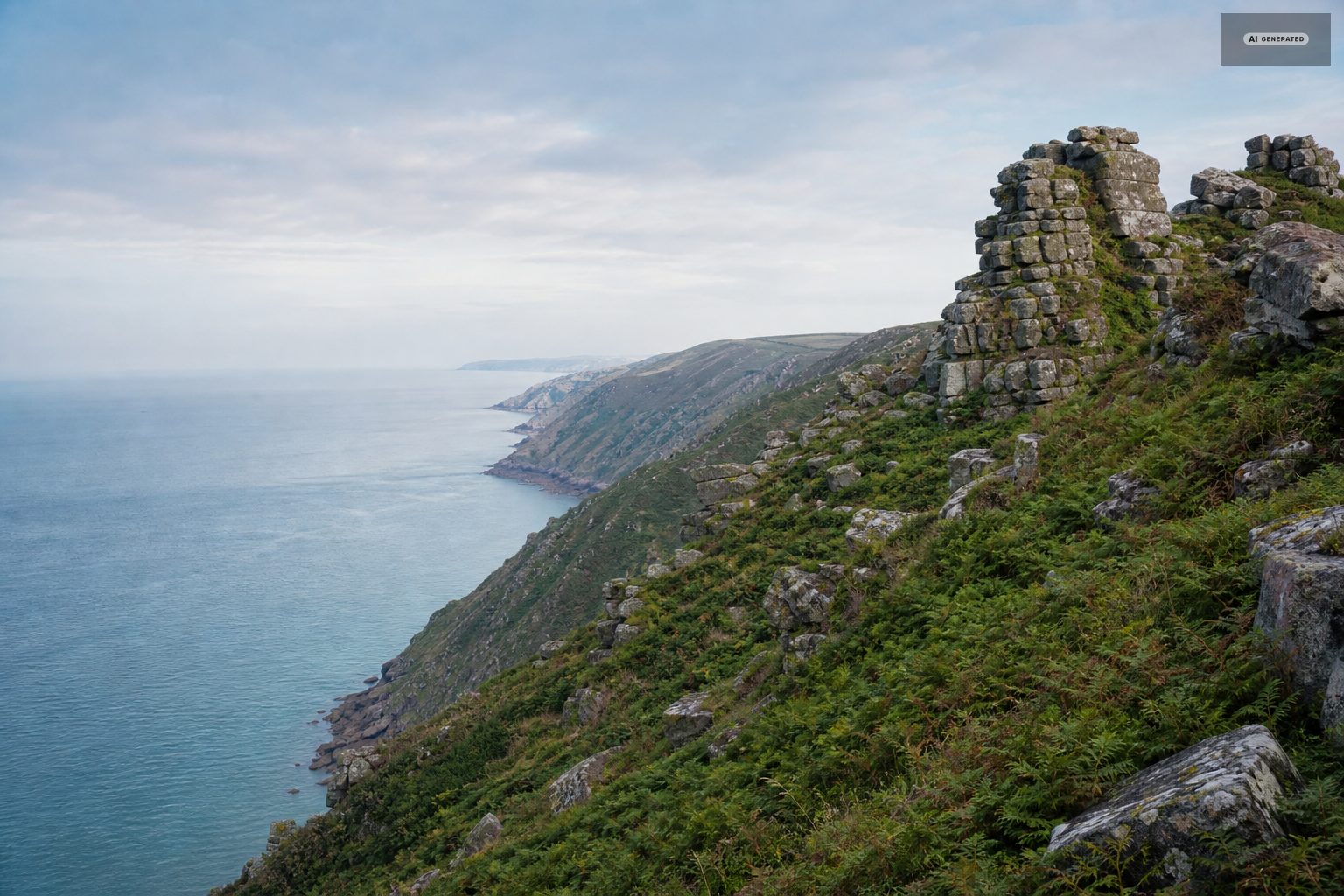
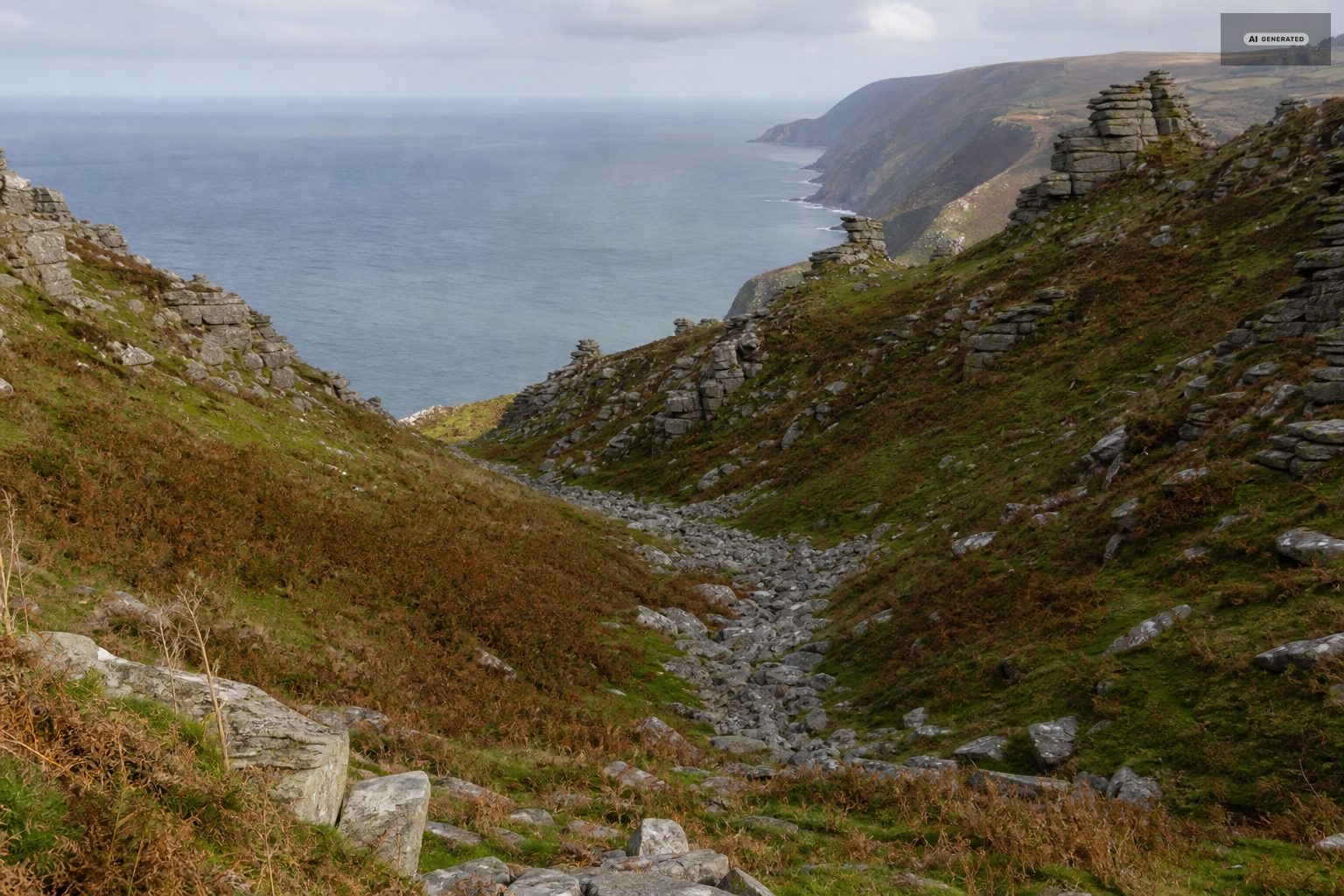
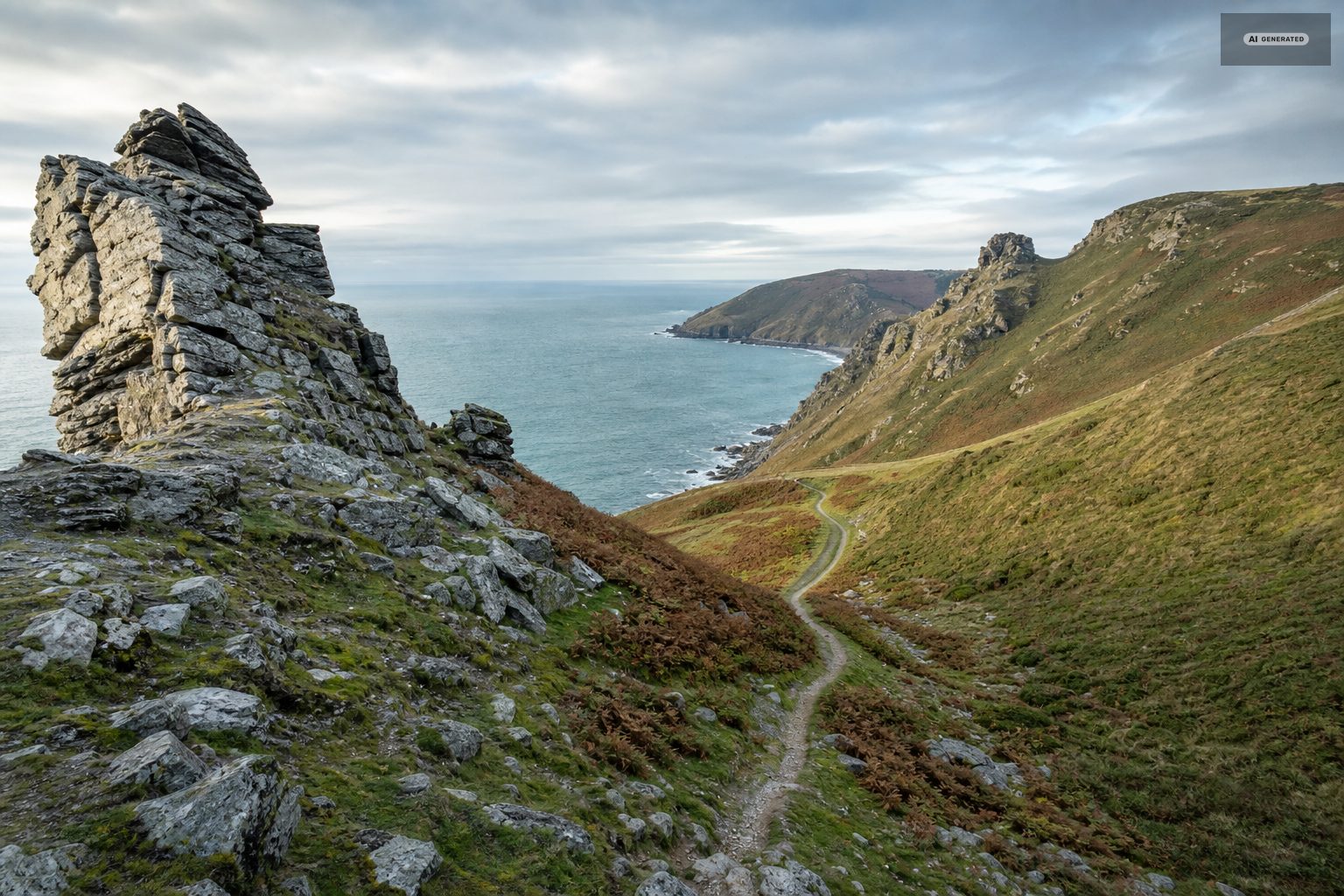
The Valley of the Rocks is a mile west of Lynton, and it is where the landscape here stops behaving. Walk out along the cliff for that mile A broad valley opens up running parallel to the coast rather than down to it, with a ridge of shattered rock between it and a six-hundred-foot drop to the sea, and nothing at the bottom of it but grass. There is no river, and there never has been in any form you would recognise.
-
AI-generated image 01
Why the Valley of the Rocks has no river in it
The usual explanation is that this was the course of the River Lyn before the last glaciation rearranged the drainage. The valley was cut by water that no longer comes this way; the Lyn now turns inland and reaches the sea at Lynmouth instead. What is left is the shape of an old river valley with the river removed, which is why the proportions look wrong for what is in it.
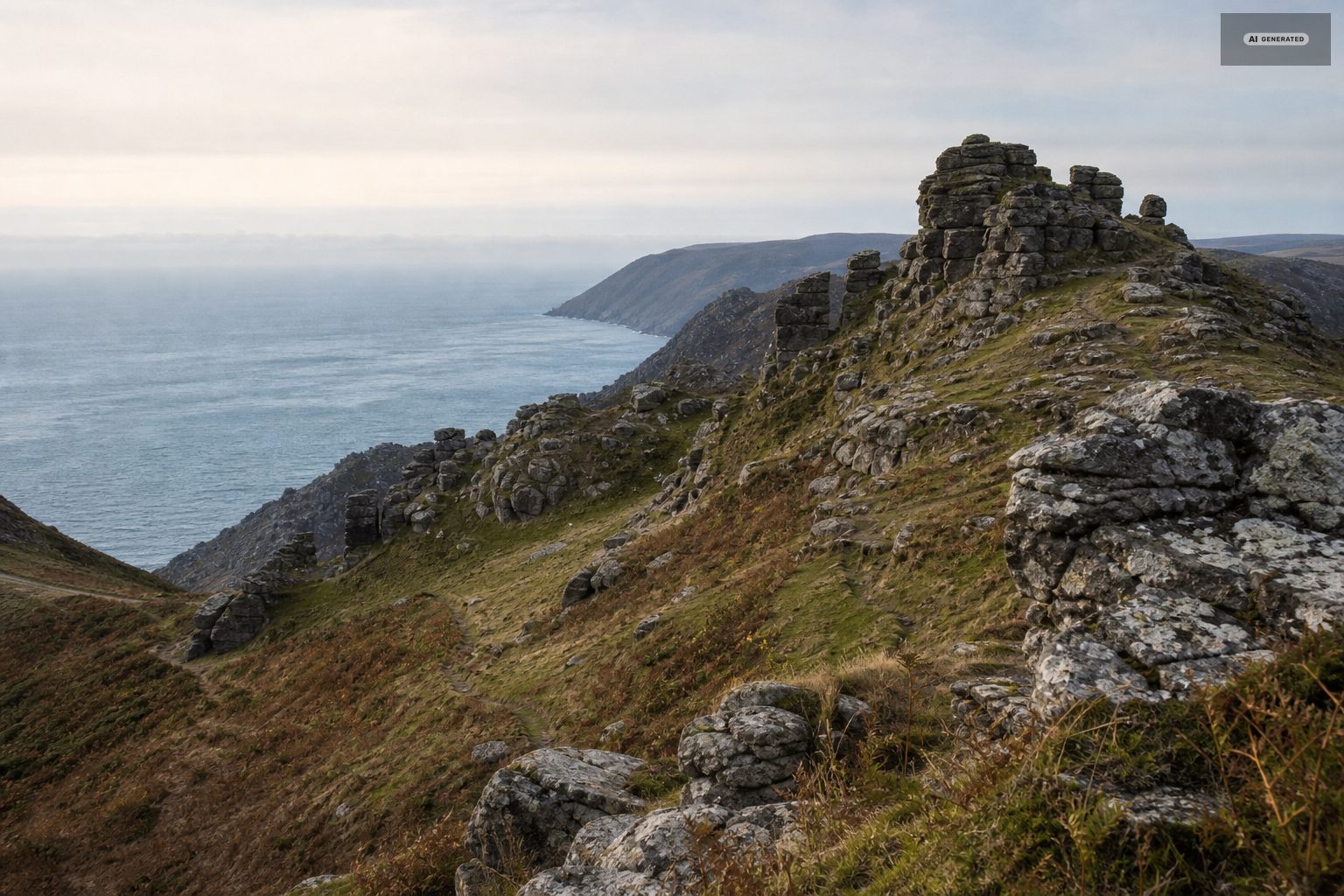
The rock is Devonian sandstone and slate, frost-shattered into the towers and stacks that give the individual features their names: Castle Rock at the seaward end, the Devil's Cheesewring on the ridge, Rugged Jack above the valley floor.
The accepted explanation is that the valley was cut by a river that no longer runs through it. In the last glaciation the ground here was frozen, meltwater ran along the coast rather than down to it, and when the ice went the drainage found a shorter route to the sea - leaving a deep valley running parallel to the coast with nothing at the bottom of it. The rock towers are what the weather has done to the sides since.
-
AI-generated image 02
The goats
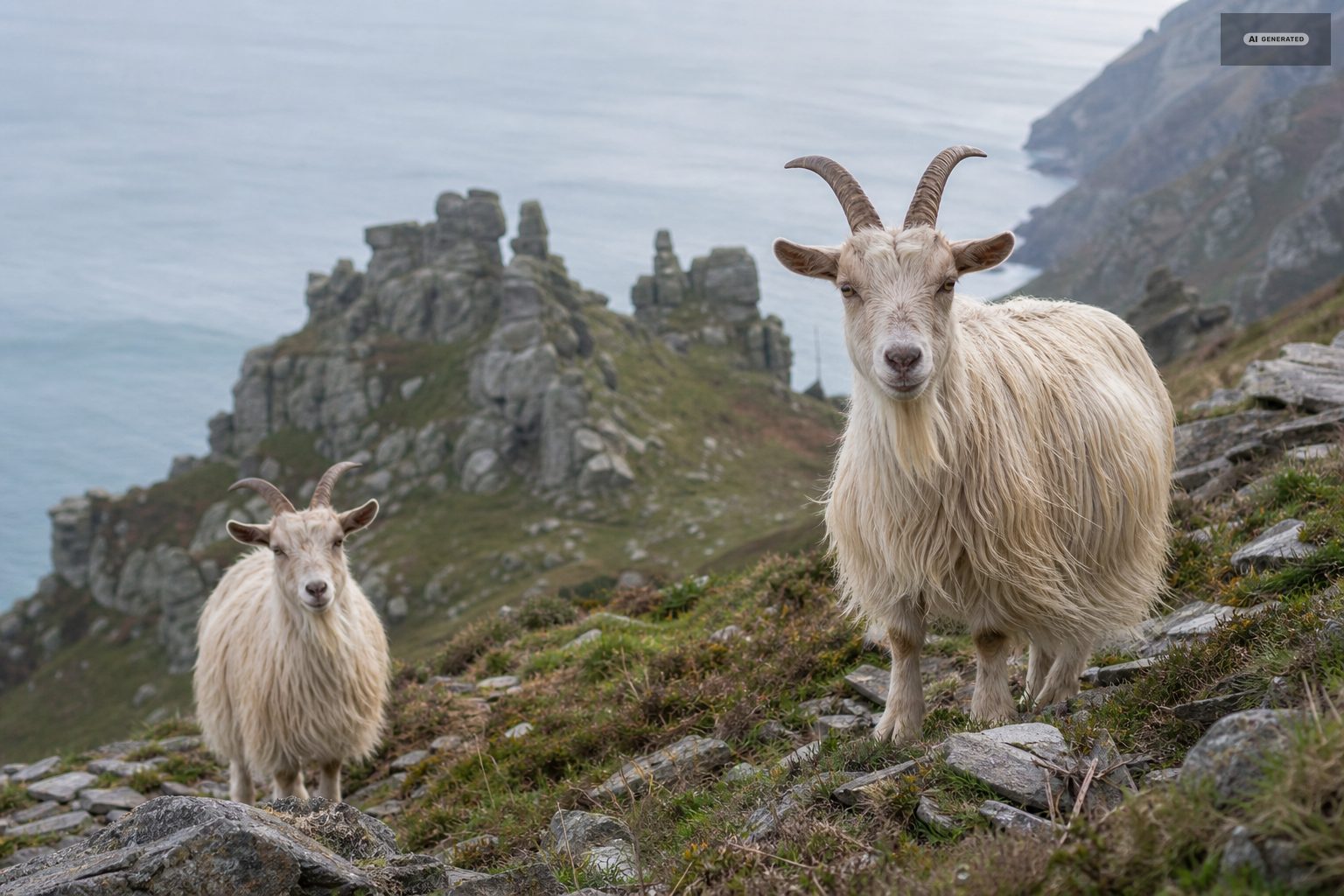
A herd of feral goats has lived on these slopes for a very long time and shows no interest in leaving. They are genuinely wild, they hold the steep ground above the path, and they are entirely used to people. Give them room, keep dogs on a lead, and do not feed them. They are the reason a lot of visitors come, and the reason the ridge grass is as short as it is.
The herd is feral rather than wild, descended from animals kept here generations ago, and it is part of what keeps the valley open - the grazing holds back the scrub that would otherwise close the rock towers in. They are used to people and will stand their ground on the path; walking round them rather than through them is the whole of the etiquette, and dogs are the one thing that turns a placid herd nervous.
-
AI-generated image 03
How to walk the Valley of the Rocks from Lynton
The North Walk from Lynton
The classic approach to the Valley of the Rocks. A broad, level path cut into the cliff face runs west from Lynton, contouring above the sea for about a mile with the drop on your right the whole way. It is the easiest mile on this coast and one of the most exposed-feeling, and it delivers you into the valley at Castle Rock. Allow half an hour each way at a strolling pace.
The ridge
From the valley floor you can climb onto the ridge between the outcrops. It is short, rough underfoot and steep in places, and the reward is the sea on one side and the valley on the other at the same time. Not one for slippery days.
Continuing to Lee Bay
The road and the coast path both carry on west from the valley towards Lee Bay and Woody Bay. Turning it into a longer circuit that comes back over the top is a comfortable half day; the walking guide covers the options.
-
AI-generated image 04
Getting there without walking
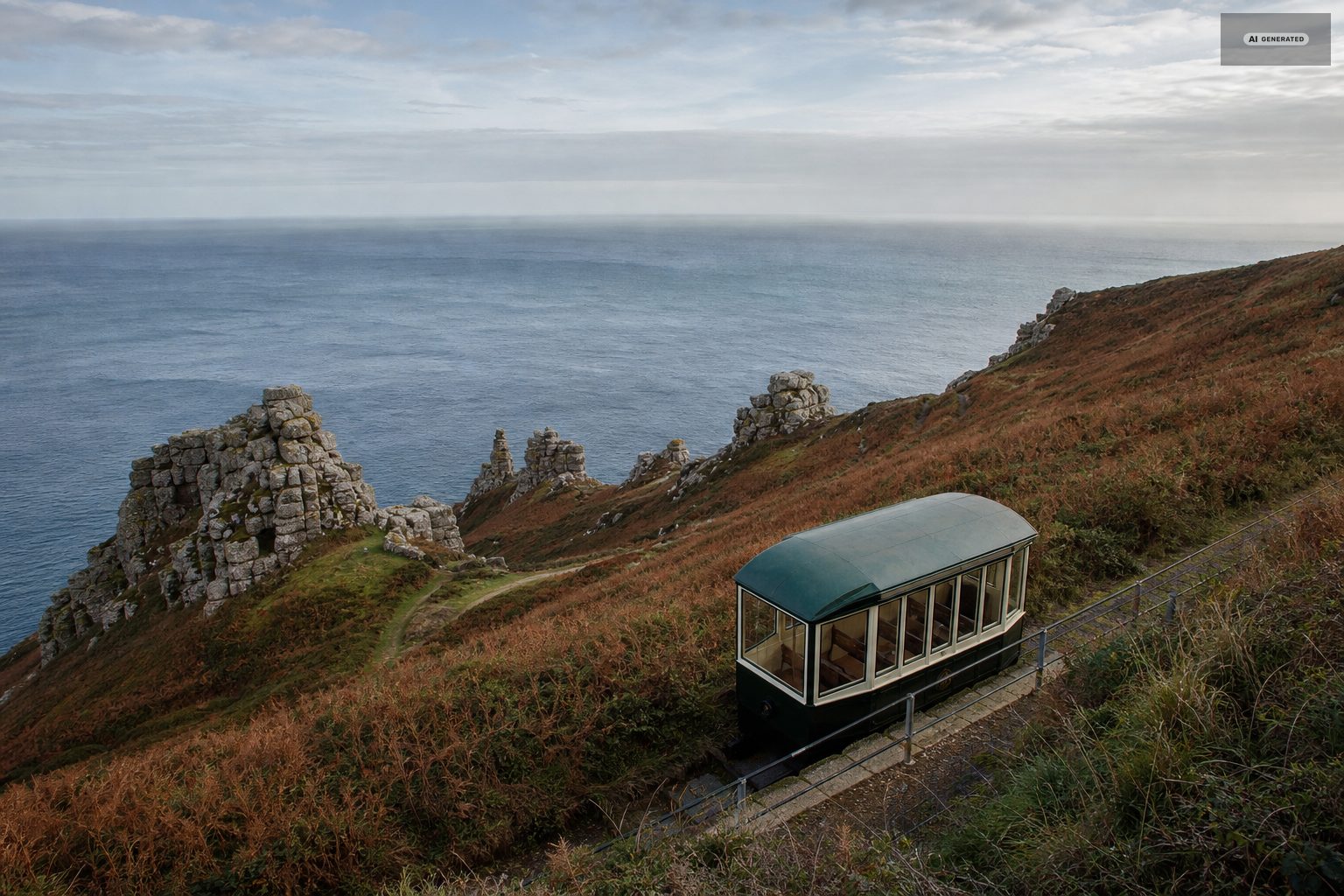
The coast road from Lynton runs through the valley and there is parking at the far end. If you are coming up from Lynmouth, the cliff railway puts you within a mile of the start of the North Walk, which makes the whole thing possible without a car.
There is a road in, and a car park at the valley itself, which makes this one of the few pieces of dramatic Exmoor coast that is reachable without a climb. The road is narrow and busy in summer, and the honest advice is to arrive early or late; at midday in August the walk from Lynton is often faster than the drive.
-
AI-generated image 05
When to come
Early morning and the hour before sunset are when the rock has shadow in it and the light comes along the coast rather than down onto it. Midsummer afternoons are the busiest, and the valley floor is large enough that this matters less than it would elsewhere. In winter the wind across the ridge is serious, and the North Walk is the sheltered option.
Early morning and the last hour of light are the two times the valley earns its reputation. The rock towers are east-facing at one end and west at the other, so there is always a side of the valley with the sun low across it, and the goats move down onto the open grass at both ends of the day.
Common questions
How far is the Valley of the Rocks from Lynton?
About a mile on foot along the North Walk, a level cliff path that takes around half an hour at an easy pace. By road it is a couple of minutes, and there is parking at the western end.
Why is the Valley of the Rocks dry?
It is generally taken to be the abandoned course of the River Lyn, cut before glaciation altered the drainage. The river now turns inland and reaches the sea at Lynmouth, leaving a river valley with no river in it.
Are the goats in the Valley of the Rocks wild?
Yes, they are a long-established feral herd. They are used to people but not tame - keep your distance, keep dogs on a lead and do not feed them.
Can you walk from the Valley of the Rocks to Lynmouth?
Yes. Walk the North Walk back into Lynton and either take the cliff railway down or follow the road. Allow about an hour and a half for the whole thing at a comfortable pace.
What is Castle Rock?
The seaward outcrop at the end of the valley, a shattered sandstone tower with a short scramble to a viewpoint over the Bristol Channel. It is the most photographed feature in the valley.